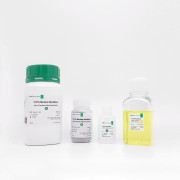
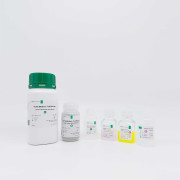
Modified Gifu Anaerobic Medium — mGAM, also written as Modified GAM — is the Japanese-pharmacopoeial-tradition broth/agar for fastidious anaerobes. Originally described by Mitsuoka (1965) as Gifu Anaerobic Medium (GAM) for systematic study of human intestinal anaerobes, the medium has become the reference anaerobic medium across Japanese pharma, academic, and clinical microbiology, and is the recommended growth medium for Japan Collection of Microorganisms (JCM) anaerobic deposits.
Overview
Modified Gifu Anaerobic Medium — mGAM, also written as Modified GAM — is the Japanese-pharmacopoeial-tradition broth/agar for fastidious anaerobes. Originally described by Mitsuoka (1965) as Gifu Anaerobic Medium (GAM) for systematic study of human intestinal anaerobes, the medium has become the reference anaerobic medium across Japanese pharma, academic, and clinical microbiology, and is the recommended growth medium for Japan Collection of Microorganisms (JCM) anaerobic deposits.
The 'Modified' variant (mGAM, Nissui 05426) reduces glucose from 3 g/L in the original GAM to 0.5 g/L. This change minimises pH drift during long incubations, a critical requirement for slow-growing strict anaerobes. The dual-reductant system — L-cysteine 0.5 g/L plus sodium thioglycolate 0.3 g/L — gives a lower equilibrium Eh than single-reductant media and is one of the defining technical features of the medium. Hemin (5 mg/L) supports haem-auxotrophic Bacteroides; menadione is not in the standard formulation but can be added on request.
Package Contents
Each GMExpression Modified GAM kit contains:
- Mixture A — pre-weighed mGAM base (peptone, soya peptone, proteose peptone No. 3, digest serum, yeast extract, beef extract, liver extract, glucose 0.5 g/L, NaCl, soluble starch, L-cysteine·HCl, sodium thioglycolate, L-tryptophan, hemin, K2HPO4) for 5 L final volume.
- Stock M — Menadione (Vitamin K3) stock, 1 mg/mL in ethanol, for users adding menadione (not in standard mGAM).
- Stock H — Hemin top-up stock for batches requiring additional hemin.
- 5 × airtight PP storage bags + 5 × heat-resistant rubber bands for PRAS-format dispensing.
- Instruction manual (A5 booklet, v1.0).
Customisation options on request: agar variant at 15 g/L for plates (Modified GAM Agar, Nissui 05425); semi-solid variant at 5 g/L agar for cysts/spore preservation; menadione-supplemented variant for routine clinical Bacteroides isolation; configure for Hungate-tube AAE workflows.
Composition — per 1 L equivalent unless stated otherwise
Modified GAM Broth (Nissui 05426; Mitsuoka 1965 + modification; per 1 L)
| Component | Concentration | Function |
|---|
| Peptone (mixed pancreatic digest) | 5.0 g | Peptide nitrogen source |
| Soya peptone | 3.0 g | Plant-derived peptide source |
| Proteose Peptone No. 3 | 10.0 g | High-quality casein digest, growth factors |
| Digested serum solids | 13.5 g | Complex protein source, growth factors |
| Yeast extract | 2.5 g | B-vitamins, NAD precursors |
| Beef extract | 2.2 g | Amino acid mixture, peptides |
| Liver extract | 1.2 g | Iron, B12, folate, haem precursors |
| D-Glucose | 0.5 g | Reduced from 3 g/L original GAM — minimises pH drift |
| Sodium chloride (NaCl) | 3.0 g | Osmotic balance |
| Soluble starch | 5.0 g | Trace-toxin absorption; supports starch-fermenting organisms |
| L-Cysteine·HCl·H2O | 0.5 g | Reductant component 1 |
| Sodium thioglycolate | 0.3 g | Reductant component 2 — dual-reductant system |
| L-Tryptophan | 0.2 g | Indole testing substrate |
| Hemin | 5.0 mg | Haem source for Bacteroides |
| Dipotassium phosphate (K2HPO4) | 2.5 g | Phosphate buffer |
Pre-autoclaving pH: 7.3 ± 0.1 at 25 °C. Adjust with 1 M NaOH or 1 M HCl as required.
Modified GAM Agar variant
| Component | Concentration |
|---|
| mGAM broth base (as above) | 49.4 g |
| Agar (microbiological grade) | 15.0 g |
→Culturomics and Media Navigator
Need help matching this medium to your microorganism — or starting from a target organism and finding the medium that fits? Use the GMExpression Culturomics and Media Navigator: a curated, cross-referenced tool that lets you (i) start from a medium and view the bacterial taxa it is recommended for, or (ii) start from a target organism (genus, species, or DSMZ/ATCC strain ID) and view the panel of GMExpression media that will support it. The Navigator integrates Modified GAM Medium with the wider YCFA, Chopped Meat Broth, BHI-S, Wilkins-Chalgren, Anaerobic Columbia Blood Agar, GMM, M2GSC, BBE, KVLB, CCFA, TPY, and Egg Yolk Agar catalogue.
Use and Applications
- Universal anaerobe enrichment in Japanese R&D and pharma workflows — broth and agar formats; the de facto standard medium in Japanese anaerobic microbiology.
- JCM-deposit growth medium — Japan Collection of Microorganisms recommends mGAM for the majority of obligate-anaerobe deposits.
- Cell-bank holding and working-cell-bank propagation for Clostridium, Bacteroides, Bifidobacterium, Lactobacillus (now Lactobacillus sensu stricto plus 25 reclassified genera per Zheng et al. 2020 IJSEM 70:2782) in pharma / live biotherapeutic product manufacturing.
- Primary isolation of intestinal anaerobes from clinical and research samples (Mitsuoka's original use case).
- Anaerobic AST as an alternative to Wilkins-Chalgren in laboratories that prefer Japanese-pharmacopoeial-tradition methods (CLSI M11 reference remains WCh).
- Spore germination and outgrowth of Clostridium and related spore-formers — the dual reductant system favours rapid germination.
- Comparative-medium studies as the Japanese-reference benchmark against YCFA, BHI-S, Wilkins-Chalgren, and Modified Chopped Meat Broth.
Compatible Microorganisms
Obligate anaerobes — Mitsuoka 1965 / Nissui 05426 validated organisms
- Bacteroides fragilis (ATCC 25285 = JCM 11019), B. thetaiotaomicron, B. vulgatus, B. uniformis
- Parabacteroides distasonis, P. merdae, P. johnsonii
- Prevotella spp., Porphyromonas spp.
- Fusobacterium nucleatum, F. necrophorum, F. varium
- Clostridium perfringens (ATCC 13124 = JCM 1290), C. sporogenes, C. butyricum, C. tetani, C. novyi, C. septicum
- Clostridioides difficile (Lawson 2016 reclassification)
- Peptostreptococcus anaerobius, Finegoldia magna, Anaerococcus spp., Peptoniphilus spp.
- Cutibacterium acnes (Scholz & Kilian 2016 reclassification)
- Eggerthella lenta (formerly E. lentum)
- Veillonella parvula, V. atypica
- Lactobacillus sensu stricto and the 25 reclassified genera per Zheng et al. 2020: e.g. Lactobacillus acidophilus, Lactiplantibacillus plantarum (formerly L. plantarum), Limosilactobacillus reuteri (formerly L. reuteri), Levilactobacillus brevis (formerly L. brevis), Lacticaseibacillus rhamnosus (formerly L. rhamnosus), Lacticaseibacillus paracasei
- Bifidobacterium spp.
- Eubacterium sensu lato (note: many reclassified to Agathobacter, Anaerobutyricum, Eubacterium sensu stricto)
- Actinomyces spp.
Preparation
1Weigh. Use the pre-weighed Mixture A: 59.0 g per litre for mGAM broth, 74.0 g per litre for mGAM agar. Tare a clean autoclavable Schott bottle of at least 1.5× final volume.
2Suspend & dissolve. Add Mixture A to 950 mL of distilled or deionised water. Heat with frequent agitation to 95–100 °C until completely dissolved (typically 8–12 min — the rich peptone formulation requires extended heating).
3Adjust pH. Cool briefly to ~45 °C. Verify pH with a calibrated meter; target 7.3 ± 0.1 at 25 °C. Adjust with 1 M NaOH or 1 M HCl as required.
4Bring to final volume. Make up to 1000 mL with distilled water.
5Dispense. Broth: 5–10 mL per Hungate or screw-cap tube. Bulk: leave in autoclavable bottle, cap one-quarter turn loose.
6Autoclave. 115 °C × 15 min (69 kPa). The 115 °C autoclave step — rather than the standard 121 °C — is the original Mitsuoka 1965 specification. The lower temperature preserves thermolabile components (digest serum, liver extract) at the cost of a longer cycle. 121 °C × 15 min is acceptable as an alternative if the lower-temperature cycle is not available, but recovery of fastidious organisms is slightly reduced. For agar plates, 121 °C × 15 min is acceptable since the agar requires the higher melting temperature.
7Cool & reduce. Transfer broth to AAE for cooling and 24-h pre-reduction. For agar: cool to 48–50 °C, pour plates inside laminar-flow hood.
8Pre-reduction QC. Verify reduction by resazurin tab indicator (if added as 1 mg/L option) or by inoculation of an Eh-sensitive QC organism (Faecalibacterium prausnitzii) into a parallel tube.
Critical control points
- Autoclave temperature. Mitsuoka 1965 specifies 115 °C × 15 min for the broth. This preserves growth factors in digest serum and liver extract. 121 °C × 15 min is acceptable but gives slightly reduced recovery of Faecalibacterium prausnitzii and related Firmicutes.
- Dual-reductant system. The L-cysteine plus thioglycolate combination delivers a lower equilibrium Eh than YCFA's single-cysteine system. Verify by resazurin colour: pink/red = oxidised, colourless/pale yellow = reduced. Add 1 mg/L resazurin at the user's request for visual confirmation.
- Pre-reduction time. Allow 24 h equilibration inside an AAE before inoculation of strict anaerobes. The dual-reductant system reaches steady-state Eh more slowly than a single-reductant medium.
Cautions
Autoclave at 115 °C if available. The Mitsuoka 1965 specification is 115 °C × 15 min. Use the lower temperature where possible — particularly for inoculum-grade broth used in cell-bank work or in slow-growing-organism culturomics.
Glucose excess. Do not supplement with additional glucose. The deliberately reduced glucose (0.5 g/L) is what distinguishes mGAM from original GAM. Higher glucose → pH drift → suboptimal recovery of pH-sensitive organisms (Faecalibacterium, Akkermansia muciniphila).
Liver extract and biosecurity. Liver extract is bovine-derived. The same Australian DAFF EX188M zoosanitary pipeline used for YCFA and BHI-S applies. Customs clearance documentation available for Japan, Korea, Taiwan, China, Singapore, ASEAN.
Thioglycolate and oxidation. Sodium thioglycolate slowly oxidises in aerobic storage. Pre-weighed Mixture A is supplied under N2; storage in original sealed packaging is essential. Once opened, use within 6 weeks.
Long-term storage of prepared broth. Even with the dual reductant, prepared mGAM stored aerobically at 4 °C will show rising Eh over 6 weeks. Anaerobic storage (vacuum-sealed + O2 absorber) extends usable life to 6 months for strict-anaerobe applications.
Storage and Expiry · Safety
- Dehydrated Mixture A: 15–30 °C in original N2-flushed sealed packaging. Shelf life 30 months from manufacture.
- Stock M (menadione), optional: 4 °C, protected from light. Stable 6 months.
- Stock H (hemin top-up), optional: 4 °C, protected from light. Stable 8 weeks.
- Prepared broth, aerobic 4 °C: 4 weeks routine; 6 weeks if not subject to repeated opening.
- Prepared agar plates, aerobic 4 °C sealed: 4 weeks.
- Prepared broth, anaerobic (vacuum-sealed + O2 absorber): 6 months for strict-anaerobe use.
Safety notes. mGAM contains bovine-derived components (beef extract, digest serum, liver extract). Handle in a Class II BSC when culturing BSL-2 pathogens. L-cysteine and thioglycolate are mild eye irritants — wear nitrile gloves and safety glasses during weighing. Hemin in alkaline NaOH is corrosive. SDS available on request.
References
- Mitsuoka T. (1965). The fecal flora in man. Zentralblatt für Bakteriologie Abt. I Orig. 195: 455.
- Nissui Pharmaceutical product information sheet, Modified GAM Broth 05426; Modified GAM Agar 05425.
- Mitsuoka T. (2014). Establishment of intestinal bacteriology. Bioscience of Microbiota, Food and Health 33(3): 99–116. doi: 10.12938/bmfh.33.99.
- Goodman AL et al. (2011). Extensive personal human gut microbiota culture collections characterized and manipulated in gnotobiotic mice. PNAS 108(15): 6252–6257.
- Zheng J et al. (2020). A taxonomic note on the genus Lactobacillus: Description of 23 novel genera. IJSEM 70: 2782–2858.
- JCM (Japan Collection of Microorganisms) catalogue, RIKEN BRC. https://jcm.brc.riken.jp.
- Sasaki H et al. (2019). Comparative analyses of human gut microbiota using cultivation-based and culture-independent methods. Frontiers in Microbiology 10: 1839.
Frequently Asked Questions
Q1. What is the difference between GAM and Modified GAM (mGAM)?
Original GAM (Mitsuoka 1965) contains 3 g/L glucose. Modified GAM (mGAM, Nissui 05426) reduces glucose to 0.5 g/L. The lower glucose minimises pH drift during long anaerobe incubations and improves recovery of pH-sensitive organisms (Faecalibacterium, Akkermansia). For most modern anaerobic-microbiology applications mGAM is preferred. For specific spore-germination protocols or for direct comparison with historical Mitsuoka 1965 data, original GAM may be requested as a custom order.
Q2. Why is the autoclave temperature 115 °C instead of 121 °C?
Mitsuoka's 1965 specification preserves thermolabile components in digest serum and liver extract that contribute to recovery of fastidious organisms. 121 °C × 15 min is acceptable but gives slightly reduced recovery of Faecalibacterium prausnitzii and related Firmicutes. For agar plates, 121 °C is recommended for adequate agar melting; for broth, 115 °C × 15 min is preferred.
Q3. What is the difference between mGAM and YCFA Modified Medium?
Both are fastidious-anaerobe media but with different design rationales. YCFA (Duncan, Hold, Stewart, Flint 2002) is engineered for SCFA-utilising butyrate-producing Firmicutes — it includes acetate, propionate, isovalerate, valerate, isobutyrate in the formulation. mGAM (Mitsuoka 1965 + modification) is a richer general-purpose broth — it includes liver extract and digested serum but no exogenous SCFA. For gut-microbiome culturomics with butyrate-producer focus → YCFA. For general anaerobic enrichment, Japanese-pharmacopoeial alignment, or richer growth of Bacteroides/Prevotella → mGAM.
Q4. Is mGAM compatible with CLSI M11 AST?
mGAM is not the CLSI M11 reference (Wilkins-Chalgren is). However, mGAM is widely used in Japanese clinical microbiology as an AST broth and gives generally comparable MICs to WCh for most antibiotic / anaerobe combinations. For CLSI-conformant AST reporting use WCh; for in-house or Japanese-tradition AST, mGAM is acceptable with appropriate QC.
Q5. Can mGAM be used for Bifidobacterium isolation from infant stool / probiotic products?
Yes, but TPY (Trypticase-Phytone-Yeast extract; Scardovi 1986) is the more selective and reproducible Bifidobacterium medium. mGAM supports Bifidobacterium growth but does not differentiate from other anaerobes. For Bifidobacterium-targeted work (probiotic QC, infant gut studies) use TPY (GMNB-TPY01). For general gut-anaerobe enrichment with Bifidobacterium as one of many target genera, mGAM is appropriate.
Q6. Why does my mGAM broth appear darker after autoclaving?
Mild Maillard browning is expected from the rich peptone + reducing-sugar combination at 115–121 °C. The medium should be straw-yellow to light-amber. Dark amber → brown indicates excessive autoclaving (> 20 min or > 121 °C). Limit autoclave time to 15 min at the specified temperature.
Q7. Is the medium compatible with the Anaerobic Preparation Kit (APK)?
Yes. The APK vacuum-deoxygenation workflow applies identically to mGAM in Hungate-tube format. Pre-reduction inside the AAE for 24 h before inoculation is the recommended protocol. Resazurin can be added at 1 mg/L (custom order) for visual reduction confirmation.
Q8. Are taxonomic name changes (Lactobacillus reclassification, Clostridium → Clostridioides difficile) reflected in the QC organism list?
Yes. The instruction manual provides both the historical name (familiar to long-time mGAM users) and the current valid name per IJSEM. The Zheng et al. 2020 IJSEM 70:2782 reclassification splits the historical genus Lactobacillus into 25 new genera; the Lawson et al. 2016 paper reclassifies Clostridium difficile as Clostridioides difficile; the Scholz & Kilian 2016 paper reclassifies Propionibacterium acnes as Cutibacterium acnes. All three changes are reflected in the QC organism list.