


Gut Microbiota Medium (GMM) | For 5L
- Product Code: GMNB-GMM01
- Availability: In Stock
Tags: Gut Microbiota Medium
Overview
The defining ingredient is porcine gastric mucin (Type II or Type III, 4 g/L) — a complex glycoprotein that no other commercial culture medium currently supplies. The mucin provides both a fermentable substrate for mucin-degrading organisms (A. muciniphila, Bacteroides thetaiotaomicron mucin-utilisation locus, Ruminococcus torques, R. gnavus reclassified Mediterraneibacter gnavus) and host-glycan signal that primes expression of polysaccharide-utilisation loci. The medium also includes SCFA (acetate 33 mM, propionate 9 mM, isobutyrate / isovalerate / valerate 1 mM each — added post-autoclave inside the AAE), which support cross-feeding of SCFA-utilising Firmicutes. Because no commercially-validated ready-to-rehydrate GMM exists, this product addresses a clear market gap and complements the GMExpression YCFA platform for full-coverage human gut culturomics.
We also have
YCFA Modified Medium · YCFA Full Recipe · YCFA Base · Modified Chopped Meat Broth (ATCC 1490) · Chopped Meat with Carbohydrates · Beef Granules
Package Contents
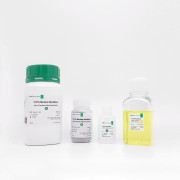
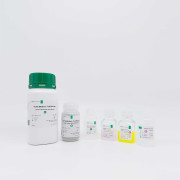
Each GMExpression GMM kit contains:
- Mixture A — pre-weighed GMM base (BHI base 18 g/L + Yeast extract 5 g/L + Trypticase 5 g/L + Glucose 2 g/L + Cellobiose 1 g/L + Maltose 1 g/L + Soluble starch 1 g/L + K2HPO4 + KH2PO4 + NaCl + MgSO4 + CaCl2 + resazurin) for 5 L final volume.
- Mixture B — Porcine gastric mucin (Type II) + L-cysteine·HCl, pre-blended, with Oxygen absorber. Default provided Porcine gastric mucin is Type II, end user can source Type III from Sigma if needed.
- Stock H — Hemin stock, 1.00 mg/mL in 0.05 M NaOH. Packed in PET square bottle sealed in an aluminium-foil pouch. Dose 5.00 mL per litre, added with Mixture A before sterilisation.
- Stock K — Vitamin K1, supplied in requested formats. Format A: 0.50 mg/mL in 95 % ethanol, 0.22 µm filter-sterilised, 15 mL, PET square bottle sealed in an aluminium-foil pouch. Format B: 5x 2 mL microtubes, each holding approximately 2 mg of pure vitamin K1, from which the user prepares a 0.50 mg/mL ethanolic stock. Dose 2.00 mL per litre in either format.
- Stock S — branched and C5 short-chain fatty acids — iso-butyric, iso-valeric and n-valeric acid at 200 mmol/L each in water, PP bottle sealed. Dose 5.00 mL per litre, added with Mixture A at the dissolving step. Acetate and propionate are not in this bottle: these two items are supplied as sodium acetate and sodium propionate within Mixture A.
- 5 × airtight PP storage bags + 5 × heat-resistant rubber bands.
- Instruction manual.
Customisation options on request: agar variant at 15 g/L for plates; HMO-supplemented variant for infant-gut culturomics; a porcine-free variant substituting bovine submaxillary mucin (Sigma M3895); supply as PRAS Hungate tubes pre-poured ready for direct inoculation. Each is a separately specified formulation with its own recipe, process qualification and release criteria; contact technical support to confirm availability and lead time.
Composition — per 1 L equivalent unless stated otherwise
GMM broth base (per 1 L of the final media liquid)
| Component | Concentration | Function |
|---|---|---|
| Brain Heart Infusion base (dehydrated) | 18.0 g | Rich peptone, glucose, infusion solids base |
| Yeast extract | 5.0 g | B-vitamins, NAD precursors |
| Trypticase (pancreatic digest of casein) | 5.0 g | Supplementary peptide source |
| D-Glucose | 2.0 g | Primary carbohydrate |
| Cellobiose | 1.0 g | Disaccharide; supports Ruminococcus, Bacteroides |
| Maltose | 1.0 g | Disaccharide; supports glucose-derived utilisation |
| Soluble starch | 1.0 g | Polysaccharide; supports starch-utilising organisms |
| Sodium acetate, anhydrous | 2.707 g | Acetate to 33 mmol/L; supplied as the salt within Mixture A |
| Sodium propionate, anhydrous | 0.865 g | Propionate to 9 mmol/L; supplied as the salt within Mixture A |
| Porcine gastric mucin (Type II / III) | 4.0 g | Principal glycan substrate — the component that distinguishes this medium; supports Akkermansia muciniphila and other mucin-degrading commensals and provides a defined mucin background for glycan-utilisation work |
| L-Cysteine·HCl | 0.5 g | Reducing agent; lowers the redox potential of the finished medium |
| Hemin (CAS 16009-13-5) | 5.0 mg | Required by Bacteroides; supplied as Stock H and added before sterilisation |
| Vitamin K1, phylloquinone (CAS 84-80-0) | 1.0 mg | LLipophilic naphthoquinone growth factor for Bacteroides, Porphyromonas and Prevotella; supplied as Stock K and added after sterilisation |
| K2HPO4 / KH2PO4 | 2.0 g / 1.0 g | Phosphate buffer |
| NaCl, MgSO4, CaCl2 | 2.0 g / 0.2 g / 0.05 g | Mineral mix |
| Resazurin | 1.0 mg | Redox indicator (pink/red oxidised, colourless reduced) |
Mixture A supplies the base above, including the two short-chain fatty acid salts, and totals 41.823 g per litre of finished medium. Five litres require 209.113 g and the bottle is filled to 215 g, a dispensing margin rather than an extra dose: weigh 41.823 g for every litre and do not divide the bottle by eye. Mucin and L-cysteine·HCl·H2O are supplied pre-blended as Mixture B; hemin and vitamin K1 are supplied as Stocks H and K. Salt masses are declared on the anhydrous basis; the controlled formula specifies the hydrate actually supplied and the equivalent hydrated mass used at weighing. The brain-heart-infusion base is a formulated product that carries its own carbohydrate, phosphate and salt content, so the figures above are declared addition amounts rather than total analysed concentrations.
Short-chain fatty acid supplement (Stock S; final concentrations in the finished media liquid)
| Short-chain fatty acid | Final concentration | Notes |
|---|---|---|
| Acetate | 33 mM (2.7 g/L as anhydrous sodium acetate) | Principal colonic SCFA; carbon and energy source for acetate-utilising taxa |
| Propionate | 9 mM (0.87 g/L as anhydrous sodium propionate) | Secondary most abundant colonic SCFA; a fermentation end-product of Bacteroides and Akkermansia |
| Iso-butyrate | 1 mM (0.09 g/L equiv) | Branched-chain C4 acid |
| Iso-valerate | 1 mM (0.10 g/L equiv) | Branched-chain C5 acid |
| n-Valerate | 1 mM (0.10 g/L equiv) | Straight-chain C5 acid |
Molar concentrations are the controlling specification; the mass equivalents are given on the declared chemical basis, and the acid or salt form actually supplied is stated on the lot dosing card. All five acids are present before sterilisation — acetate and propionate as their sodium salts within Mixture A, and the three branched and C5 acids as Stock S — so these are the concentrations present in the medium as autoclaved.
Adjust to pH 7.2 ± 0.2 at 25 °C once every component including Stock S is present and before the volume is made up. Release specification for the sterilised, reduced medium is pH 6.8–7.2 at 25 °C. Measure at the stated temperature: reading a warm preparation against a 25 °C specification is not reproducible, and automatic temperature compensation corrects the electrode response rather than the chemistry.
Use and Applications
- Culture-collection work on the human gut microbiota. A rich, mucin-containing broth for building isolate collections from stool and colonic mucosa, used alongside complementary media rather than as a single-medium strategy.
- Enrichment and routine propagation of Akkermansia muciniphila (ATCC BAA-835 / DSM 22959) and other mucin-degrading commensals in research settings.
- Mucin-degradation phenotyping. On the agar variant, isolates can be screened for zones of mucin clearing. Clearing is a phenotype, not an identification: confirm identity by an appropriate molecular or biochemical method.
- Growth studies against a defined SCFA background. The medium is supplied with acetate, propionate and the three minor acids at fixed concentrations, giving a reproducible starting metabolite background for studies of butyrate producers and other acid-utilising taxa. Demonstrating cross-feeding as such additionally requires a donor–recipient design with the corresponding controls.
- Glycan-utilisation research. Mucin provides a complex host-type glycan source for studies of polysaccharide-utilisation systems in Bacteroides thetaiotaomicron and related organisms. Induction of a specific locus is a testable question in this medium, measured directly, rather than a property conferred by the medium.
- Isolation of gut commensals for defined-community work, including the assembly of isolate panels for gnotobiotic colonisation studies.
- Research-stage process and consortium development in stool-bank and microbial-consortium programmes. Supplied for research use; it is not a diagnostic medium and does not carry clinical, FMT-release or live-biotherapeutic manufacturing qualification.
Compatible Microorganisms
The taxa below are supported by the composition of this medium and are listed as candidates for evaluation in your own workflow. Growth of a given strain depends on inoculum history, gas phase, incubation and transfer technique as well as on the medium, so qualify the strains you intend to work with against a strain-appropriate positive control.
Mucin-degraders (the GMM signature group)
- Akkermansia muciniphila (ATCC BAA-835 = DSM 22959) — verrucomicrobial intestinal-mucin specialist. Mucin supplementation markedly improves its recovery and growth; culture-collection records also list mucin-free cultivation options for the type strain, so mucin is best described as the preferred substrate rather than an absolute requirement.
- Bacteroides thetaiotaomicron (ATCC 29148) — extensive mucin-utilisation locus repertoire
- Mediterraneibacter gnavus (formerly Ruminococcus gnavus; reclassified Togo et al. 2018 / Lawson et al. 2023)
- Mediterraneibacter torques (formerly Ruminococcus torques) — mucin-degrading commensal
- Bifidobacterium bifidum — extracellular endo-β-galactosidases acting on mucin glycans
Butyrate-producing commensals
- Faecalibacterium duncaniae (DSM 17677 = A2-165; formerly assigned to F. prausnitzii) — acetate utilisation for butyrate production
- Roseburia intestinalis (DSM 14610)
- Agathobacter rectalis (formerly Eubacterium rectale; reclassified Rosero et al. 2016)
- Anaerobutyricum hallii (formerly Eubacterium hallii; reclassified Shetty et al. 2018)
- Anaerostipes caccae, A. hadrus
General gut commensals
- Bacteroides fragilis, B. uniformis, B. ovatus, B. caccae; Phocaeicola vulgatus (formerly Bacteroides vulgatus)
- Parabacteroides spp.
- Bifidobacterium spp. (TPY preferred for selective Bifidobacterium isolation)
- Lactobacillus sensu lato (per Zheng et al. 2020 reclassification)
- Eubacterium limosum
- Christensenella minuta (DSM 22607)
- Coprococcus catus, C. eutactus
Preparation
Critical control points
- Mucin source and grade. Sigma M2378 (Type II) is a crude preparation and M1778 (Type III) is partially purified; they differ in bound sialic acid and in non-mucin content. Bovine submaxillary and ovine intestinal mucins are different materials again. Treat each source and grade as a controlled formulation variant, fix one in the batch record, and revalidate any growth or glycan endpoint on a change.
- SCFA addition stage. Stock S is added with Mixture A at the dissolving step, before sterilisation, and acetate and propionate are supplied as their sodium salts within Mixture A. At the working pH of this medium the five acids are present almost entirely as their non-volatile carboxylate anions — at pH 7.2 an acid of pKa 4.76 is about 0.4 % undissociated — and their salts are thermally stable well above 121 °C. This is the same stage at which the volatile fatty acid blend is incorporated in the standard YCFA preparations (DSMZ medium 1611, JCM medium 1130). Post-sterilisation addition from a separately sterilised stock remains a legitimate alternative where independent metabolite dosing is the object of the study; it requires a validated sterilisation route for the stock, an aseptic anaerobic transfer, and the added volume to be carried into the final-volume accounting.
- Vitamin K1 dose and light protection. Stock K is 0.50 mg/mL, so the dose is 2.00 mL per litre — 10.0 mL for a 5 L batch, delivering 1.0 mg/L. Vitamin K1 decomposes in light: keep the bottle in its foil pouch, return it after each withdrawal, and switch off any glove-box UV lamp before bringing the stock or supplemented medium into the cabinet.
- Final-volume convention. The medium is made up to 998 mL per litre before sterilisation, and Stock K brings it to 1.000 L afterwards. Every declared concentration refers to that final volume. Any further addition dilutes all of them and must be accounted for.
- Reduction check. The resazurin indicator is a qualitative guide: colourless is consistent with a reduced medium, but it does not read out a specific redox potential, demonstrate sterility, or confirm that a given strain’s requirements are met. Use the site criteria for release, with a biological or instrumental control where the endpoint demands one.
Cautions
Storage and Expiry · Safety
- Dehydrated Mixture A: 15–30 °C in the original packaging, kept dry and closed.
- Mixture B (mucin + cysteine, N2-flushed): 2–8 °C in the original sealed packaging. Mucin is hygroscopic and cysteine oxidises on exposure to air, so reseal promptly and keep the opened-bag interval short.
- Stock H and Stock K: 2–8 °C, protected from light. Hemin in alkaline solution and vitamin K1 in ethanol are both light-sensitive.
- Stock S: 15–25 °C is preferred. 2–8 °C is acceptable. Do not freeze. Keep tightly sealed in the PP bottle. Confirm the liquid is clear and in a single layer before every dose — see FAQ 5.
- Prepared medium: store under the gas condition it will be used in. Medium held aerobically must be re-reduced before use with strict anaerobes.
- Expiry. Each component and the prepared medium carry a dated expiry on the lot documentation, established against defined sterility, pH, redox and growth-promotion endpoints. Provisional periods are assigned pending completion of real-time stability studies, and the lot documentation is the governing statement.
Safety notes. Contains porcine and bovine biological components. Mucin powder is a respiratory irritant: weigh and transfer Mixture B in a fume hood, a ducted powder-weighing enclosure, or a biological safety cabinet. A laminar-flow clean bench is not suitable, because it directs filtered air outward across the work surface and protects the product rather than the operator. Dispense Stock S with adequate ventilation. Safety Data Sheets are supplied with the product.
References
- Goodman AL, Kallstrom G, Faith JJ, Reyes A, Moore A, Dantas G, Gordon JI. (2011). Extensive personal human gut microbiota culture collections characterized and manipulated in gnotobiotic mice. PNAS 108(15): 6252–6257. doi: 10.1073/pnas.1102938108. [Origin of the gut-microbiota-medium approach to culture-collection work]
- Leibniz Institute DSMZ. Medium 1611: modified YCFA medium. [Fatty acids are incorporated before autoclaving; the vitamin solution is filter-sterilised separately]
- RIKEN BioResource Center JCM. Medium 1130: YCFA medium. [The neutralised volatile fatty acid mixture is included in the base before sterilisation]
- Leibniz Institute DSMZ. Cultivation of anaerobes — technical guidance on oxygen exclusion, redox indicators, gas-phase and buffer selection.
- Sakamoto M, Sakurai N, Tanno H, Iino T, Ohkuma M, Endo A. (2022). Genome-based, phenotypic and chemotaxonomic classification of Faecalibacterium strains: proposal of three novel species Faecalibacterium duncaniae sp. nov., Faecalibacterium hattorii sp. nov. and Faecalibacterium gallinarum sp. nov. IJSEM 72(5): 005379. doi: 10.1099/ijsem.0.005379. [Current identity of strain A2-165 = DSM 17677]
- Plovier H et al. (2017). A purified membrane protein from Akkermansia muciniphila or the pasteurized bacterium improves metabolism in obese and diabetic mice. Nature Medicine 23(1): 107–113.
- Derrien M, Vaughan EE, Plugge CM, de Vos WM. (2004). Akkermansia muciniphila gen. nov., sp. nov., a human intestinal mucin-degrading bacterium. IJSEM 54: 1469–1476.
- Browne HP et al. (2016). Culturing of 'unculturable' human microbiota reveals novel taxa and extensive sporulation. Nature 533: 543–546.
- Lagier J-C et al. (2016). Culture of previously uncultured members of the human gut microbiota by culturomics. Nature Microbiology 1: 16203.
- Rosero JA et al. (2016). Reclassification of Eubacterium rectale in the genus Agathobacter. IJSEM 66: 768–773.
- Shetty SA, Zuffa S, Bui TPN, Aalvink S, Smidt H, de Vos WM. (2018). Reclassification of Eubacterium hallii as Anaerobutyricum hallii. IJSEM 68: 3741–3746.
- Sigma-Aldrich product specifications: mucin from porcine stomach Type II (M2378, crude) and Type III (M1778, partially purified); bovine submaxillary mucin Type I-S (M3895).
- Duncan SH, Hold GL, Harmsen HJM, Stewart CS, Flint HJ. (2002). Growth requirements and fermentation products of Fusobacterium prausnitzii. IJSEM 52: 2141–2146.