


Wilkins-Chalgren Anaerobe Medium | For 5L
- Product Code: GMNB-WCH01
- Availability: In Stock
Tags: Anaerobe Medium
Overview
The GMExpression formulation is supplied with pre-balanced Tryptone, Gelysate Peptone, yeast extract, L-arginine, sodium pyruvate, glucose (1 g/L only, deliberately low to minimise pH drift during AST incubation), NaCl, hemin (5 mg/L), and menadione/Vitamin K₃ (0.5 mg/L). Agar concentration is 10 g/L for broth-grade WChB and 15 g/L for solid WChA. Pre-autoclaving pH is 7.1 ± 0.1 at 25 °C — the tight ± 0.1 specification is one of the reasons WCh delivers more reproducible MICs than BHI-S in inter-laboratory comparisons.
We also have
YCFA Modified Medium · YCFA Full Recipe · YCFA Base · Modified Chopped Meat Broth (ATCC 1490) · Chopped Meat with Carbohydrates · Beef Granules
Package Contents
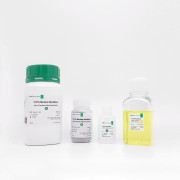
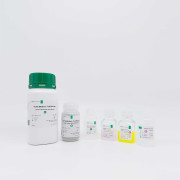
Each GMExpression Wilkins-Chalgren kit contains:
- Mixture A — pre-weighed dehydrated WCh base (Tryptone, Gelysate Peptone, yeast extract, L-arginine, sodium pyruvate, NaCl, glucose, hemin, menadione) for 5 L final volume. Reformulated for broth (33 g/L total) or agar (38 g/L total) format.
- Stock M — Menadione (Vitamin K₃) stock, 1 mg/mL in 95 % ethanol, amber vial, light-protected (for top-up applications).
- Stock H — Hemin stock, 25 mg in 5 mL of 0.05 M NaOH, sealed amber vial (for top-up applications).
- 5 × airtight PP storage bags + 5 × heat-resistant rubber bands for PRAS-format dispensing.
- Instruction manual including a 96-well-plate AST protocol annex (A5 booklet, v1.0).
Customisation options on request: add 5 % laked sheep blood (DAFF EX188M certified) for clindamycin and sulfonamide MIC; add 5 % defibrinated sheep blood (unlaked) for microaerophile AST; configure for 96-well plate pre-dispensing; supply with pre-titrated CLSI antibiotic QC panel.
Composition — per 1 L equivalent unless stated otherwise
WCh Broth (Wilkins & Chalgren 1976; BD Difco 257500 / Oxoid CM0619 reference; per 1 L)
| Component | Concentration | Function |
|---|---|---|
| Tryptone (pancreatic digest of casein) | 10.0 g | Amino-acid / peptide source |
| Gelysate Peptone (pancreatic digest of gelatin) | 10.0 g | Supplementary peptide source |
| Yeast extract | 5.0 g | B-vitamins, NAD precursors |
| D-Glucose | 1.0 g | Limited carbohydrate — minimises pH drift during AST |
| Sodium chloride (NaCl) | 5.0 g | Osmotic balance |
| L-Arginine | 1.0 g | Defined nitrogen source; substrate for Bacteroides arginine deiminase |
| Sodium pyruvate | 1.0 g | Detoxifies H2O2 from oxidative metabolism |
| Menadione (Vitamin K3, CAS 58-27-5) | 0.5 mg | Menaquinone bypass for haem-requiring anaerobes |
| Hemin (CAS 16009-13-5) | 5.0 mg | Required by Bacteroides and other haem-auxotrophs |
| For broth: agar (semi-solid format) | 0 g (broth) / 10 g (broth-equivalent) | Standard broth has no agar |
Pre-autoclaving pH: 7.1 ± 0.1 at 25 °C — adjust with 1 M NaOH or 1 M HCl.
WCh Agar (BD Difco 257600 / Oxoid CM0643 reference; per 1 L)
| Component | Concentration | Notes |
|---|---|---|
| WCh broth base (as above) | 23.0 g (all components above except agar) | Identical formulation |
| Agar (microbiological grade) | 15.0 g | Solid plate format |
| Laked sheep blood (optional, for clindamycin and sulfonamide MIC) | 5 % v/v | Add at 50 °C post-autoclave; laking releases thymidine that would otherwise antagonise sulfonamides |
Use and Applications
- Anaerobic AST — broth microdilution. WCh broth is dispensed in 96-well plates with serial antibiotic dilutions; inoculum standardised to 1 × 10⁶ CFU/mL final concentration; plates incubated in an AAE at 35 ± 2 °C for 42–48 h; MIC read as lowest concentration with no visible turbidity. CLSI M11 reference organisms: B. fragilis ATCC 25285 and B. thetaiotaomicron ATCC 29741.
- Anaerobic AST — agar dilution. WCh agar with serial antibiotic dilutions; inoculate with a Steers replicator; CLSI M11 standard.
- E-test® / gradient strip MIC determination on anaerobes — WCh agar is the recommended supporting medium (bioMérieux E-test instructions).
- Routine anaerobic culture and primary isolation as an alternative to BHI-S or Brucella blood agar; supports virtually all clinically significant anaerobes.
- Pharma antimicrobial drug-discovery — comparative MIC testing of novel anti-anaerobic candidates; the major non-clinical demand segment.
- Daily QC plates in clinical microbiology laboratories per CLSI M22 requirements.
Compatible Microorganisms
Reference QC organisms (CLSI M11)
- Bacteroides fragilis ATCC 25285 — primary AST reference; clindamycin / metronidazole / cefoxitin / carbapenem QC organism
- Bacteroides thetaiotaomicron ATCC 29741 — secondary reference; β-lactam-resistance QC
- Eggerthella lenta ATCC 43055 — metronidazole and erythromycin QC
- Clostridium perfringens ATCC 13124 — penicillin / chloramphenicol QC
- Clostridioides difficile ATCC 700057 — metronidazole / vancomycin QC
- Fusobacterium nucleatum ATCC 25586 — β-lactam-susceptible anaerobe AST
General-purpose growth (non-AST)
- Bacteroides spp., Parabacteroides spp., Prevotella spp., Porphyromonas spp.
- Clostridium spp., Clostridioides difficile, Peptostreptococcus anaerobius, Finegoldia magna
- Veillonella spp., Cutibacterium acnes, Actinomyces spp.
- Fusobacterium spp.
Not optimised for: SCFA-utilising Firmicutes (Faecalibacterium prausnitzii, Roseburia) — these require YCFA Modified Medium for satisfactory recovery.
Preparation
Critical control points
- pH measurement temperature. WCh's tighter pH specification (± 0.1) requires the pH meter to be temperature-corrected to 25 °C. Measuring at autoclave-exit temperature (~80 °C) will give a falsely low reading by 0.2–0.3 pH units due to the temperature coefficient of the phosphate / amine buffer system.
- Menadione light-sensitivity. Vitamin K3 photoisomerises to its trans-form (inactive) under fluorescent or sunlight exposure. Protect both the stock and the prepared plates from extended light exposure; wrap WCh agar plates in aluminium foil for long-term storage.
- AST inoculum standardisation. Per CLSI M11, the inoculum is prepared by suspending colonies in WCh broth (or saline), adjusting to 0.5 McFarland (1.5 × 10⁸ CFU/mL), and diluting 1:10 in WCh broth to give the 1.5 × 10⁷ CFU/mL AST inoculum. The final in-well density is 1 × 10⁶ CFU/mL after 1:15 dilution. Inoculum-density deviations are the single most common source of unreproducible MICs.
Cautions
Storage and Expiry · Safety
- Dehydrated powder (Mixture A): store sealed at 15–30 °C away from direct sunlight. Shelf life 36 months from manufacture.
- Stock M (menadione in ethanol): store at 4 °C protected from light. Stable 6 months.
- Stock H (hemin in NaOH): store at 4 °C protected from light. Stable 8 weeks.
- Prepared broth, aerobic 4 °C: 4 weeks routine; 6 weeks if not subject to repeated opening.
- Prepared agar plates, aerobic 4 °C, foil-wrapped: 4 weeks; blood-supplemented agar: 2 weeks.
- Prepared broth, anaerobic (vacuum-sealed + oxygen absorber): 6 months.
Safety notes. WCh is largely defined; the principal biosafety concerns are (i) the BSL-2 organisms being tested (handle in Class II BSC) and (ii) the menadione ethanol stock (flammable). Laked sheep blood is bovine-derived (DAFF EX188M certified). SDS available on request.
References
- Wilkins TD, Chalgren S. (1976). Medium for use in antibiotic susceptibility testing of anaerobic bacteria. Antimicrobial Agents and Chemotherapy 10(6): 926–928. doi: 10.1128/AAC.10.6.926.
- CLSI M11, current edition. Methods for Antimicrobial Susceptibility Testing of Anaerobic Bacteria; Approved Standard. Wayne, PA: Clinical and Laboratory Standards Institute.
- CLSI M100, current edition. Performance Standards for Antimicrobial Susceptibility Testing.
- Jousimies-Somer HR et al. (2002). Wadsworth-KTL Anaerobic Bacteriology Manual, 6th ed., chapter 7.
- BD Difco™ Wilkins Chalgren Anaerobe Broth (257500) and Agar (257600) product information sheets.
- Oxoid Manual 9th ed., CM0619 (broth) and CM0643 (agar).
- Carroll KC et al. (eds). (2019). Manual of Clinical Microbiology, 12th ed. ASM Press.