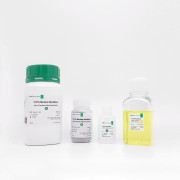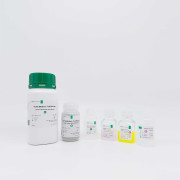



TPY Medium for Bifidobacterium | For 5L
- Product Code: GMNB-TPY01
- Availability: In Stock
Overview
TPY differs from generic anaerobic media (BHI, GAM) in three ways: (a) pH 6.5 ± 0.2 optimum (lower than the 7.0–7.4 of BHI / mGAM), matching the colonic pH at which Bifidobacterium grows optimally; (b) defined trace-cofactor matrix (Mg2+, Zn2+, Ca2+, Fe3+) for the genus-specific fructose-6-phosphate phosphoketolase pathway (Scardovi & Trovatelli 1965 Ann Microbiol 15:19); (c) Tween 80 (polysorbate 80) supplying oleic-acid esters that enhance exopolysaccharide production. No bile, no antibiotics in the base formulation — TPY is non-selective "rich-but-Bifidobacterium-friendly". For selective recovery from mixed gut or dairy cultures, add mupirocin 50 mg/L (post-autoclave filter-sterilised) to make TPY-Mup; Bifidobacterium is intrinsically mupirocin-resistant while most other Gram-positives are sensitive.
TPY is the ISO 29981:2010 reference medium for Bifidobacterium enumeration in milk products — the regulatory standard for probiotic-strain quality control by Yakult, Danone, Chr. Hansen, Morinaga, Nestlé, and the global dairy industry. The Australian customer base includes the Australian Dairy Council, Saputo Dairy Australia, and Bega — all of whom require TPY-based Bifidobacterium CFU certificates of analysis on probiotic-supplemented dairy and infant-formula products.
We also have
YCFA Modified Medium · YCFA Full Recipe · YCFA Base · Modified Chopped Meat Broth (ATCC 1490) · Chopped Meat with Carbohydrates · Beef Granules
Package Contents
Each GMExpression TPY kit contains:
- Mixture A — pre-weighed TPY base (Trypticase 10 g/L + Phytone Peptone 5 g/L + yeast extract 2.5 g/L + glucose 5 g/L + MgCl2 0.5 g/L + ZnSO4 0.25 g/L + CaCl2 0.15 g/L + K2HPO4 2 g/L) for 5 L final volume.
- Mixture B — L-cysteine·HCl·H2O 2.5 g, N2-flushed PP bag.
- Stock Fe — Ferric chloride (FeCl3) stock 10 mg/mL in 0.01 M HCl, amber vial. Light- and air-protected.
- Stock T — Tween 80 (polysorbate 80, Sigma P1754 grade) in original-packaging amber bottle, 5 mL × 5.
- Vial Mup (optional) — Mupirocin stock 10 mg/mL in 70 % ethanol, filter-sterilised, for the selective TPY-Mup variant (50 mg/L final = 5 mL per litre).
- 5 × airtight PP storage bags + 5 × heat-resistant rubber bands.
- Instruction manual (A5 booklet, v1.0) with Scardovi 1986 protocol, ISO 29981 enumeration annex, dairy / infant-formula QC workflow, and a current LPSN taxonomy reference (the Bifidobacterium genus has been substantially reorganised 2020–2024).
Customisation options on request: agar variant (TPY agar, 15 g/L agar) for plate counts; ISO 29981 ready-to-use 9 mL tube format for dairy QC laboratories; resazurin-supplemented variant (1 mg/L; YCFA-style visual O2 indicator); pre-supplemented TPY-Mup for selective Bifidobacterium from mixed cultures; LP-MRS / BSM selective variant (with lithium chloride 3 g/L + propionic acid 5 mL/L pH-adjusted).
Composition — per 1 L equivalent unless stated otherwise
TPY Broth (Scardovi 1986; ATCC Medium 1058; DSMZ Medium 56; per 1 L)
| Component | Concentration | Function |
|---|---|---|
| Trypticase (pancreatic digest of casein) | 10.0 g | Primary peptide source; BBL Trypticase or Difco Trypticase Peptone |
| Phytone Peptone (papain digest of soybean meal) | 5.0 g | Plant-derived peptide; supports aromatic-amino-acid biosynthesis |
| Yeast extract | 2.5 g | B-vitamins (especially riboflavin, niacin) |
| D-Glucose | 5.0 g | Primary fermentable carbohydrate; substrate for F6P phosphoketolase |
| L-Cysteine·HCl·H2O | 0.5 g | Reductant; Eh < −150 mV |
| Magnesium chloride hexahydrate (MgCl2·6H2O) | 0.5 g | Trace cofactor (enzymatic Mg2+) |
| Zinc sulphate heptahydrate (ZnSO4·7H2O) | 0.25 g | Trace cofactor (DNA polymerase Zn2+) |
| Calcium chloride dihydrate (CaCl2·2H2O) | 0.15 g | Trace cofactor (cell-wall stabilisation) |
| Ferric chloride (FeCl3) | 0.1 g | Iron source (electron transport in some Bifidobacterium) |
| Tween 80 (polysorbate 80) | 1.0 mL | Oleic-acid ester; enhances exopolysaccharide |
| Dipotassium hydrogen phosphate (K2HPO4) | 2.0 g | Buffer |
| For agar: Agar | 15.0 g | Solidifying agent |
Pre-autoclaving pH: 6.5 ± 0.2 at 25 °C (lower than BHI / mGAM; matches Bifidobacterium colonic optimum).
Selective TPY-Mup variant
| Additional component | Concentration | Function |
|---|---|---|
| Mupirocin (post-autoclave, filter-sterilised) | 50 mg/L | Selective: Bifidobacterium intrinsically resistant; most other Gram-positives sensitive (especially LAB co-isolates) |
Alternative LP-MRS / BSM selective variant
| Additional component | Concentration | Function |
|---|---|---|
| Lithium chloride (LiCl) | 3.0 g/L | Suppresses LAB |
| Propionic acid (pH-adjusted to 6.5) | 5.0 mL/L | Suppresses LAB; Bifidobacterium tolerates short-chain organic acids |
Use and Applications
- Probiotic strain QC and enumeration for commercial Bifidobacterium products (Yakult, Danone Actimel, Chr. Hansen BB-12, Morinaga BB536, Nestlé Bifidus). TPY is the ISO 29981 reference medium for Bifidobacterium enumeration in dairy products.
- Infant-formula and follow-on-formula probiotic QC — TPY-based plate counts of B. animalis subsp. lactis, B. infantis, B. breve, B. longum per Codex Alimentarius standards. Australian regulatory market (FSANZ).
- Antimicrobial-susceptibility testing of Bifidobacterium — TPY-base broth is the EFSA-recommended medium for Bifidobacterium AST (EFSA FEEDAP 2018 guidance).
- Research and isolation of novel Bifidobacterium species — the genus is undergoing rapid expansion (2020–2024 new species B. samirii, B. felinis, B. choloepi) with TPY as the standard isolation medium.
- Microbiome research on infant gut development — B. infantis (now B. longum subsp. infantis) is the dominant infant-gut commensal whose human-milk-oligosaccharide-utilisation locus (HMO-cluster I and II) is best studied on TPY.
- Faecal Bifidobacterium enumeration in adult populations (use TPY-Mup for selectivity in faecal background).
- Veterinary probiotic QC — B. animalis, B. pseudolongum ruminant and porcine probiotic strains.
- Yogurt / fermented-dairy QC when Bifidobacterium is part of the starter culture alongside Streptococcus thermophilus and Lactobacillus delbrueckii subsp. bulgaricus.
Compatible Microorganisms
Bifidobacterium genus — designed targets
- Bifidobacterium animalis subsp. lactis (ATCC 27536; JCM 10602) — the BB-12 / Lafti-B94 commercial probiotic lineage (Chr. Hansen). Most commercially important probiotic Bifidobacterium.
- Bifidobacterium animalis subsp. animalis (ATCC 25527) — animal-gut isolate.
- Bifidobacterium adolescentis (ATCC 15703) — adult human-gut commensal; type species of the B. adolescentis phylogenetic group.
- Bifidobacterium bifidum (ATCC 29521; JCM 1255) — genus type species; infant-gut isolate; extracellular endo-β-galactosidases for mucin glycans.
- Bifidobacterium breve (ATCC 15700; JCM 1192) — infant-gut isolate; M-16V Morinaga probiotic strain.
- Bifidobacterium longum subsp. longum (ATCC 15707) — the BB536 Morinaga commercial probiotic.
- Bifidobacterium longum subsp. infantis (ATCC 15697; JCM 1222; formerly B. infantis) — infant-gut HMO specialist.
- Bifidobacterium dentium (ATCC 27534) — adult-gut and oral cavity.
- Bifidobacterium pseudocatenulatum (ATCC 27919) — adult-gut.
- Bifidobacterium ruminantium — bovine-rumen isolate.
Related Bifidobacteriaceae (also supported)
- Gardnerella vaginalis (recently placed in Bifidobacteriaceae per genomic taxonomy) — vaginal microbiome relevance.
- Scardovia spp.
- Parascardovia denticolens.
Non-Bifidobacterium lactic-acid bacteria (also grow; use TPY-Mup for selectivity)
- Lactobacillus sensu lato (multiple genera per Zheng et al. 2020 reclassification): L. acidophilus, Lacticaseibacillus paracasei, Limosilactobacillus reuteri, Lactiplantibacillus plantarum, Lacticaseibacillus rhamnosus.
- Pediococcus pentosaceus, P. acidilactici.
- Lactococcus lactis subsp. lactis and subsp. cremoris.
- Streptococcus thermophilus.
Preparation
Critical control points
- Iron precipitation control. FeCl3 in solution can precipitate as Fe(OH)3 above pH 4.5; the inclusion of cysteine and slight medium acidity (pH 6.5) help maintain iron in solution but require disciplined preparation order. Mitigation: dissolve at moderate temperature (50–60 °C); add FeCl3 last among trace elements; immediately before pH adjustment; use freshly-prepared FeCl3 stock (the supplied Vial Fe is stored at 4 °C and is light-protected); pre-warm the agar to 55 °C before iron addition.
- Tween 80 oxidation. Polysorbate 80 contains an unsaturated oleic-acid moiety that auto-oxidises slowly during storage of the dehydrated medium. Storage of dehydrated TPY powder at 4 °C in a sealed container with desiccant extends useful shelf life from 12 to 24 months. Use a single Tween 80 supplier (Sigma P1754 is the de-facto reference); validate with B. animalis subsp. lactis BB-12 growth curve when changing lots.
- pH measurement. Measure pH at 25 °C; the 6.5 ± 0.2 specification is tighter than BHI-S or mGAM. Bifidobacterium grows optimally at pH 6.5–7.0 (colon pH range); growth is significantly slower at pH 7.4 (the BHI / mGAM range).
- Glucose-peptone Maillard. The 5 g/L glucose + peptone combination produces moderate Maillard browning during autoclaving — the medium darkens to honey-amber. Excessive browning (dark coffee colour) indicates over-autoclaving and is associated with reduced Bifidobacterium growth.
Cautions
Storage and Expiry · Safety
- Dehydrated Mixture A: 4 °C in original packaging with desiccant. Shelf life 24 months (the Tween 80 component is the limit; without desiccant, reduce to 12 months).
- Mixture B (L-cysteine, N2-flushed): 4 °C in sealed original packaging. Shelf life 18 months sealed; use within 14 days of opening (cysteine oxidises rapidly once exposed to air).
- Stock Fe (FeCl3): 4 °C, light-protected (amber vial). Shelf life 12 months sealed; 6 months after opening.
- Stock T (Tween 80): 4 °C, light-protected. Shelf life 12 months. Once opened, use within 6 months.
- Vial Mup (Mupirocin in 70 % ethanol): 4 °C for 6 months; −20 °C for 12 months. Aliquot to single-use portions to avoid freeze-thaw cycling.
- Prepared broth, aerobic 4 °C: 4 weeks routine.
- Prepared broth, anaerobic (vacuum-sealed + O2 absorber): 4–6 months for strict-anaerobe use.
Safety notes. Tween 80 is a non-hazardous food-grade material but is a mild eye irritant. Ferric chloride solution is corrosive (HCl carrier); use eye protection when handling Stock Fe. Mupirocin is a topical antibiotic — handle with skin protection; avoid inhalation of dry powder if preparing from scratch. SDS available on request.
References
- Scardovi V. (1986). Genus Bifidobacterium. In: Sneath PHA, Mair NS, Sharpe ME, Holt JG (eds), Bergey's Manual of Systematic Bacteriology vol. 2, pp. 1418–1434. Williams & Wilkins, Baltimore. [Primary reference for TPY formulation]
- Scardovi V, Trovatelli LD. (1965). The fructose-6-phosphate shunt as a peculiar pattern of hexose degradation in the genus Bifidobacterium. Annales di Microbiologia 15: 19–29. (Underlying metabolic basis for TPY's fructose / glucose content.)
- ISO 29981:2010. Milk products — Enumeration of presumptive Bifidobacteria — Colony count technique at 37 °C. [TPY-based enumeration standard for the dairy industry]
- EFSA Panel on Additives and Products or Substances used in Animal Feed (FEEDAP). (2018). Guidance on the characterisation of microorganisms used as feed additives or as production organisms. EFSA Journal 16(3): 5206. (TPY for Bifidobacterium AST.)
- Goldin BR, Gorbach SL. (1992). Probiotics for humans. In: Fuller R (ed), Probiotics — The Scientific Basis. Chapman & Hall. (TPY in probiotic context.)
- Zheng J et al. (2020). A taxonomic note on the genus Lactobacillus: description of 23 novel genera. IJSEM 70: 2782–2858. (Reclassification relevant to TPY co-cultivable LAB.)
- ATCC Microbiology Catalogue: Medium 1058 (TPY).
- DSMZ Microbiology Catalogue: Medium 56 (Bifidobacterium medium).