
Modified M2 / M2GSC Medium — Rumen-Fluid Anaerobic Culturomics Broth
- Product Code: GMNB-M2GSC01
- Availability: In Stock
Overview
The defining ingredient is clarified rumen fluid at 30 % v/v. Rumen fluid is the supernatant of fistulated-cow rumen contents (SARDI / CSIRO Armidale partners, or commercial lyophilised product), filtered, autoclaved, and lyophilised for shelf-stable supply. The medium also includes glucose 2 g/L + soluble starch 2 g/L + cellobiose 2 g/L (the GSC carbohydrate trio), sodium carbonate for CO2-headspace buffering, sodium acetate + propionate + valerate + iso-butyrate + iso-valerate (the same SCFA set as YCFA and GMM, supporting SCFA-utilising Firmicutes), L-cysteine 0.5 g/L, and the standard hemin + VK1 + resazurin set. It is the second cornerstone product (alongside GMM) for serious gut-culturomics laboratories targeting the long-tail of cultivable but neglected commensal organisms — including taxa reclassified from the historical genus Eubacterium (now distributed across Agathobacter, Anaerobutyricum, Eubacterium sensu stricto).
We also have
YCFA Modified Medium · YCFA Full Recipe · YCFA Base · Modified Chopped Meat Broth (ATCC 1490) · Chopped Meat with Carbohydrates · Beef Granules
Package Contents
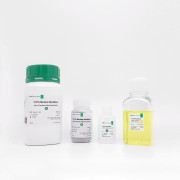
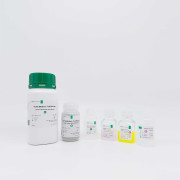
Each GMExpression M2GSC kit contains:
- Mixture A — pre-weighed M2 base (Bacto-casitone 1 g/L + yeast extract 2.5 g/L + glucose 2 g/L + cellobiose 2 g/L + soluble starch 2 g/L + sodium acetate 5 g/L + K2HPO4 + KH2PO4 + NaCl + MgSO4 + CaCl2 + Na2CO3 + resazurin) for 5 L final volume.
- Mixture B — L-cysteine·HCl 2.5 g + Na2CO3 2 g, N2-flushed PP bag.
- Rumen-fluid concentrate — lyophilised clarified rumen fluid, DAFF EX188M / ovine zoosanitary certified, equivalent to 1.5 L rumen fluid (= 5 L × 0.30 v/v); 5 × 300 mL-equivalent vials.
- Stock H — Hemin stock, 25 mg in 5 mL of 0.05 M NaOH.
- Stock K — Vitamin K1 stock, 50 mg in 5 mL of 95 % ethanol, amber.
- Stock S — SCFA mix (propionate / iso-butyrate / iso-valerate / valerate) in oxygen-free water, glass ampoule, N2-flushed. Acetate is already in Mixture A.
- 5 × airtight PP storage bags + 5 × heat-resistant rubber bands.
- Instruction manual (A5 booklet, v1.0) with Hobson-1969 / Browne-2016 protocol annexes.
Customisation options on request: agar variant at 15 g/L; defined-medium analogue (R&D-grade) substituting rumen fluid with a complex defined medium (vitamin / micronutrient / undefined-cofactor pack — note: lower recovery than authentic rumen-fluid); SCFA-omitted variant for cross-feeding studies; vegan / non-ruminant alternative on request.
Composition — per 1 L equivalent unless stated otherwise
M2GSC Broth (Hobson 1969 + Miyazaki 1997 + Browne 2016 modification; per 1 L)
| Component | Concentration | Function |
|---|---|---|
| Bacto-casitone (pancreatic digest of casein) | 1.0 g | Peptide nitrogen source (low-level — most growth factors from rumen fluid) |
| Yeast extract | 2.5 g | B-vitamins, NAD precursors |
| D-Glucose | 2.0 g | Primary carbohydrate (G in GSC) |
| Cellobiose | 2.0 g | Disaccharide for cellulolytic / cellobiose-utilising organisms (C in GSC) |
| Soluble starch | 2.0 g | Polysaccharide for starch-utilisers (S in GSC) |
| Sodium acetate (anhydrous) | 5.0 g (≡ 61 mM) | Acetate for SCFA-utilising butyrate producers (cross-feeding substrate) |
| Clarified rumen fluid (30 % v/v final) | 300 mL | Critical undefined growth-factor supplement — lyophilised concentrate |
| K2HPO4 / KH2PO4 | 0.45 g / 0.45 g | Phosphate buffer |
| NaCl | 0.9 g | Osmotic balance |
| MgSO4·7H2O | 0.09 g | Magnesium |
| CaCl2·2H2O | 0.09 g | Calcium |
| Sodium carbonate (Na2CO3) | 4.0 g | CO2-headspace buffering; lowers headspace O2 |
| L-Cysteine·HCl·H2O | 0.5 g | Reductant; Eh < −150 mV |
| Hemin | 5.0 mg | Required by Bacteroides & haem-auxotrophs |
| Vitamin K1 | 1.0 mg | Menaquinone precursor |
| Resazurin | 1.0 mg | Redox indicator |
SCFA top-up (Stock S; post-autoclave addition inside AAE; final concentrations)
| Short-chain fatty acid | Final concentration |
|---|---|
| Sodium propionate | 9 mM (0.86 g/L equiv) |
| Iso-butyric acid | 1 mM |
| Iso-valeric acid | 1 mM |
| Valeric acid (n-valeric) | 1 mM |
| (Acetate is already in Mixture A at 61 mM — no additional acetate needed) | — |
Pre-autoclaving pH: 6.8 ± 0.2 at 25 °C. Note: M2GSC's lower pH (6.8 vs 7.2 for YCFA / 7.3 for mGAM) reflects rumen-fluid physiology and favours rumen-derived organisms.
Use and Applications
- Maximum-diversity culturomics of the human gut microbiota per the Browne et al. (2016) Nature workflow (Lawley lab, Wellcome Sanger Institute). Used to culture > 130 previously-uncharacterised species from human stool.
- Rumen microbiology research — original Hobson 1969 use case; still the standard for cultivable studies of Fibrobacter succinogenes, Ruminococcus albus, R. flavefaciens, Butyrivibrio fibrisolvens, etc.
- SCFA-utilising butyrate producer enrichment from human stool — recovery comparable to or better than YCFA for Roseburia, Faecalibacterium, Anaerobutyricum hallii.
- Lachnospiraceae / Ruminococcaceae / Christensenellaceae primary isolation — these clades benefit from the undefined growth-factor content of rumen fluid.
- Bioreactor-fermentation studies of mixed gut communities — the medium supports the broadest cross-feeding network of any defined-recipe medium.
- Sporulation / dormancy studies of spore-forming Firmicutes from the human gut (Browne et al. 2016 demonstrated extensive sporulation in this medium).
Compatible Microorganisms
Human gut commensals successfully cultured per Browne et al. 2016 Nature
- Roseburia intestinalis, R. inulinivorans, R. hominis
- Faecalibacterium prausnitzii (DSM 17677)
- Agathobacter rectalis (formerly Eubacterium rectale; reclassified Rosero 2016)
- Anaerobutyricum hallii (formerly E. hallii; reclassified Shetty 2018)
- Anaerostipes caccae, A. hadrus
- Christensenella minuta (DSM 22607) — heritable-microbiome flagship organism (Goodrich 2014 Cell)
- Coprococcus catus, C. eutactus, C. comes
- Lachnospiraceae sp. nov. (multiple, characterised in Browne 2016)
- Mediterraneibacter gnavus (formerly Ruminococcus gnavus)
- Spore-forming Firmicutes recovered from heat-treated stool
Rumen organisms (Hobson 1969 original use case)
- Ruminococcus albus, R. flavefaciens — cellulolytic rumen Firmicutes
- Butyrivibrio fibrisolvens — butyrate-producing rumen organism
- Fibrobacter succinogenes (formerly Bacteroides succinogenes) — cellulolytic, succinate-producing
- Selenomonas ruminantium
- Prevotella ruminicola
General anaerobes (parallel growth)
- Bacteroides spp., Bifidobacterium spp., Lactobacillus sensu lato (Zheng 2020 reclassification)
- Clostridium spp., Eubacterium sensu stricto, Veillonella spp.
Preparation
Critical control points
- Rumen-fluid sourcing and certification. GMExpression sources rumen fluid via SARDI / CSIRO Armidale partnerships and commercial lyophilised suppliers, all DAFF EX188M / ovine zoosanitary certified. Lyophilisation extends shelf life from 6 weeks (fresh frozen) to 24 months (lyophilised at −80 °C reconstituted as needed).
- pH at 6.8 — do not over-adjust. M2GSC pH 6.8 is intentional (matches rumen-fluid physiology). Adjusting to 7.0 or 7.2 → reduced recovery of acidotolerant Firmicutes that the medium is designed to recover.
- Pre-reduction time. 24 h equilibration inside the AAE is mandatory before inoculation of fastidious organisms. The CO2-headspace + Na2CO3 buffer system reaches Eh < −250 mV after 24 h.
Cautions
Storage and Expiry · Safety
- Dehydrated Mixture A: 15–30 °C in original packaging. Shelf life 30 months.
- Mixture B (cysteine + Na2CO3, N2-flushed): 4 °C in original sealed packaging. Shelf life 12 months sealed; use within 14 days of opening.
- Lyophilised rumen-fluid concentrate: −20 °C protected from light. Shelf life 24 months unopened. Reconstituted rumen fluid: use within 48 h.
- Stock H, Stock K, Stock S: as for GMM — 4 °C, light-protected.
- Prepared broth, aerobic 4 °C: 2 weeks routine (rumen-fluid component is perishable).
- Prepared broth, anaerobic (vacuum-sealed + O2 absorber): 8 weeks for strict-anaerobe culturomics use.
Safety notes. Rumen fluid is bovine / ovine biological material. Handle inside a Class II BSC during reconstitution. SCFAs are odorous; perform Stock S addition under controlled ventilation. SDS available on request.
References
- Hobson PN. (1969). Rumen bacteria. In: Methods in Microbiology, vol 3B. Academic Press, pp. 133–149. [Original M2 medium description]
- Miyazaki K, Martin JC, Marinsek-Logar R, Flint HJ. (1997). Degradation and utilization of xylans by the rumen anaerobe Prevotella bryantii. Anaerobe 3: 373–381. [M2 modification, SCFA addition]
- Browne HP, Forster SC, Anonye BO, Kumar N, Neville BA, Stares MD, Goulding D, Lawley TD. (2016). Culturing of 'unculturable' human microbiota reveals novel taxa and extensive sporulation. Nature 533: 543–546. [Modern human-gut adaptation of M2GSC]
- Lagier J-C et al. (2016). Culture of previously uncultured members of the human gut microbiota by culturomics. Nature Microbiology 1: 16203.
- Goodrich JK et al. (2014). Human genetics shape the gut microbiome. Cell 159: 789–799. [Christensenella minuta heritability and M2GSC cultivation]
- Rosero JA et al. (2016). Reclassification of Eubacterium rectale in the genus Agathobacter. IJSEM 66: 768–773.
- Shetty SA et al. (2018). Reclassification of Eubacterium hallii as Anaerobutyricum hallii. IJSEM 68: 3741–3746.
- Duncan SH et al. (2002). Acetate utilisation and butyryl coenzyme A (CoA): acetate-CoA transferase in butyrate-producing bacteria from the human large intestine. Appl Environ Microbiol 68: 5186–5190. [Cross-feeding rationale for SCFA mix]