


CCFA + CHROMagar Compatible C. difficile Media
- Product Code: GMNB-CCFA01/GMNB-CHRCD01
- Availability: In Stock
Overview
The selective and differential mechanism combines four components: D-cycloserine (250–500 mg/L; broad-spectrum cell-wall inhibitor, D-alanine analogue inhibiting D-Ala-D-Ala ligase — C. difficile is intrinsically resistant); cefoxitin (8–16 mg/L; cephamycin β-lactam — C. difficile is resistant via inducible β-lactamase and altered PBPs); D-fructose (6 g/L; C. difficile is a strong fructose fermenter, acidifying near the colony); and neutral red (pH indicator producing characteristic yellow-on-red colonies as fructose fermentation drops local pH below 6). On UV (365 nm), C. difficile colonies show distinctive chartreuse-green fluorescence. The horse-stable / faecal odour (p-cresol from p-hydroxyphenylacetate decarboxylation) is a tentative identification clue.
This product also supports the optional CCFA-TA variant (with sodium taurocholate spore-germination supplement, Wilson et al. 1982 JCM 15:443; ~20–40 % higher C. difficile recovery from stool) and is fully compatible with proprietary CHROMagar™ C. difficile licensed supplements (sold separately by CHROMagar Microbiology, Paris) — the chromogenic substrate produces black colonies via β-glucosidase cleavage and gives faster reading (24–48 h vs 48–72 h for CCFA) with reported sensitivity and specificity > 95 % per Eckert et al. 2013 JCM 51:1002.
We also have
YCFA Modified Medium · YCFA Full Recipe · YCFA Base · Modified Chopped Meat Broth (ATCC 1490) · Chopped Meat with Carbohydrates · Beef Granules
Package Contents
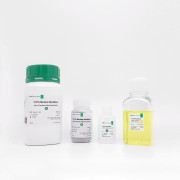
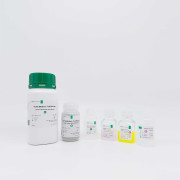
Each GMExpression CCFA kit contains:
- 10 × CCFA Agar plates (90 mm) — pre-poured, pre-reduced, individually sealed in oxygen-impermeable foil pouches with oxygen indicator. C. difficile ATCC 9689 QC release-tested.
- Vial CYC — D-Cycloserine stock (50 mg/mL in distilled water, filter-sterilised) for top-up reinforcement of selectivity (optional; standard plates are already supplemented).
- Vial CFX — Cefoxitin stock (8 mg/mL in distilled water, filter-sterilised); single-use aliquots (cefoxitin half-life ~7 days at 4 °C in solution).
- Vial TA (optional) — Sodium taurocholate stock (100 mg/mL filter-sterilised) for the CCFA-TA spore-germination variant.
- Instruction manual (A5 booklet, v1.0) with full George 1979 CCFA protocol, Wilson 1982 CCFA-TA modification, CHROMagar compatibility note, QC organism panel, and a CDI laboratory-workflow annex with cross-references to ESCMID / IDSA / CDC C. difficile guidelines.
Customisation options on request: CCFA dehydrated base (without supplements; longer shelf life); CCFA-EY variant with sterile egg yolk emulsion (lecithinase / lipase differential — see § C4 EYA); CCFA + 5 % horse blood variant (haemolysis differentiation); milder antibiotic concentrations (250 mg/L cycloserine + 8 mg/L cefoxitin, modern Wadsworth recommendation for clinical use) or original George 1979 strength (500 + 16 mg/L) for surveillance / environmental work.
Composition — per 1 L equivalent unless stated otherwise
CCFA Agar (George et al. 1979 JCM 9:214; per 1 L)
| Component | Concentration | Function |
|---|---|---|
| Proteose Peptone No. 2 (Difco) | 40.0 g | High-grade peptone; George 1979 specifies this exact peptone |
| Disodium hydrogen phosphate (Na2HPO4) | 5.0 g | Buffer (alkaline) |
| Potassium dihydrogen phosphate (KH2PO4) | 1.0 g | Buffer (acidic) |
| Sodium chloride (NaCl) | 2.0 g | Osmotic balance |
| Magnesium sulphate heptahydrate (MgSO4·7H2O) | 0.1 g | Trace cofactor |
| D-Fructose | 6.0 g | Differential substrate — fermented by C. difficile, acidifies near colony |
| Agar | 15.0 g | Solidifying agent |
| Neutral red (1 % aqueous, pre-autoclave) | 30 mg (= 3 mL of 1 % stock) | pH indicator — yellow < pH 6 (C. difficile colonies); pink-red pH 7–8 (background) |
| D-Cycloserine (post-autoclave, filter-sterilised) | 250 mg/L (clinical) — 500 mg/L (George 1979 original / surveillance) | Selective agent 1 |
| Cefoxitin (post-autoclave, filter-sterilised) | 8 mg/L (clinical) — 16 mg/L (George 1979 original / surveillance) | Selective agent 2 |
Pre-autoclaving pH: 7.4 ± 0.2 at 25 °C.
Optional variants
| Variant | Additional component | Effect |
|---|---|---|
| CCFA-TA (Wilson 1982) | Sodium taurocholate 1.0 g/L (post-autoclave) | Stimulates C. difficile spore germination; ~20–40 % higher recovery from stool |
| CCFA-EY (Wadsworth) | Sterile egg yolk emulsion 40–50 mL/L (4–5 % v/v) | Lecithinase / lipase differential — C. difficile is negative for both (confirms species) |
| CCFA-Blood | Sterile defibrinated horse or sheep blood 50 mL/L (5 % v/v) | Enhanced colony morphology; haemolysis reading |
| CHROMagar™ C. difficile (proprietary; supplement sold separately) | β-glucosidase chromogenic substrate + proprietary selective antibiotics + sodium taurocholate (per CHROMagar Microbiology CDIFF kit) | Black colonies; faster reading (24–48 h); sensitivity / specificity > 95 % (Eckert 2013) |
Use and Applications
- CDI laboratory diagnosis — culture of C. difficile from stool for confirmation following positive toxin EIA or NAAT. Required for ribotyping, AST, and outbreak investigation. CCFA / CHROMagar are isolation media, not diagnostic media in themselves; positive culture must be confirmed for toxigenicity by orthogonal testing per current ESCMID / IDSA / CDC guidelines.
- CDI surveillance and outbreak investigation — environmental sampling of hospital wards (high-touch surfaces, commodes, mattresses) for C. difficile contamination. The most-frequently-reordered selective anaerobic medium in clinical microbiology.
- CDI strain typing — culture-based isolation is the precursor to PCR ribotyping (027 hypervirulent NAP1; 078 community-acquired; 017 toxin A-negative B-positive; 014/020; 002; 106), MLST, and whole-genome sequencing.
- Antimicrobial-susceptibility testing of C. difficile — requires pure culture as starting material (typically transferred from CCFA primary isolation to non-selective Wilkins-Chalgren or BHI-S for MIC determination).
- FMT donor screening — many faecal microbiota transplant programmes culture donor stool on CCFA (often CCFA-TA for maximum sensitivity) to exclude asymptomatic C. difficile carriage.
- Research on C. difficile — sporulation studies, virulence-factor characterisation, host-pathogen interactions; C. difficile must first be isolated on CCFA then sub-cultured to non-selective media for downstream work.
- Veterinary C. difficile isolation — porcine, bovine, equine, canine; ribotypes overlap with human community-acquired strains (especially RT 078).
Compatible Microorganisms
CCFA — designed target (positive growth)
- Clostridioides difficile (ATCC 9689, type strain; ATCC 700057, hypervirulent typing reference; ATCC BAA-1382 toxin-positive). Colony morphology: small (1–4 mm), ground-glass / fried-egg appearance, yellow on pink-red background. Odour: horse-stable / faecal (p-cresol from p-hydroxyphenylacetate decarboxylation via hpdBCA). UV fluorescence: chartreuse-green at 365 nm (useful for tentative identification before sub-culture). All toxigenic and non-toxigenic ribotypes recovered: 027 (NAP1; hypervirulent), 078 (community-acquired), 017 (toxin A-negative, B-positive), 014/020, 002, 106, and others.
CCFA — partially suppressed (non-target)
- Clostridium sordellii, C. bifermentans, C. perfringens — partially cycloserine-resistant; may grow as smaller colonies; differentiated by colony morphology + UV fluorescence (negative).
- Bacteroides fragilis group — cefoxitin-resistant; can grow but is bile-and-esculin-negative on CCFA (no bile/esculin in formulation); differentiated by colony appearance and lack of yellow-on-red phenotype.
- Enterococcus spp. — partially cefoxitin-susceptible; usually suppressed.
CCFA — suppressed (selective check)
- Facultative Gram-negatives — E. coli, Klebsiella, Enterobacter, Pseudomonas (cycloserine + cefoxitin combination).
- Gram-positive cocci — Staphylococcus, Streptococcus (cycloserine).
- Most Bifidobacterium, Lactobacillus, Eubacterium, Fusobacterium.
CHROMagar C. difficile — designed target
- Clostridioides difficile — black colonies via β-glucosidase chromogen cleavage. Sensitivity and specificity > 95 % (Eckert 2013).
Preparation
Critical control points
- Antibiotic concentration choice. Modern Wadsworth (250 mg/L cycloserine + 8 mg/L cefoxitin) gives ~20 % higher C. difficile recovery from stool than George 1979 original (500 + 16 mg/L) but allows more facultative-anaerobe breakthrough. Choose by application: clinical diagnosis → modern milder; surveillance / environmental → George original.
- Cefoxitin stability. Cefoxitin in aqueous solution has a half-life of ~7 days at 4 °C; prepare a fresh stock for each batch of medium. Aliquot Vial CFX into single-use portions on first opening; freeze unused aliquots at −20 °C.
- Antibiotic mixing. If cycloserine or cefoxitin is added to medium below 50 °C, localised undissolved precipitates produce regions of higher antibiotic concentration — these appear as colony-free zones on the plate. Mitigation: add antibiotics to 50 °C medium with magnetic stirring; pour plates within 15 min.
- Cefoxitin pH sensitivity. Cefoxitin loses ~20 % activity per 0.5 pH unit decrease. C. difficile fermenting fructose produces lactate and acetate, locally acidifying around the colony — this is the desired differential phenomenon but if bulk medium pH drifts below 7.0 during storage, cefoxitin selectivity is compromised. Mitigation: tighter post-autoclaving pH verification; store plates upright in sealed bags to minimise CO2 uptake.
- Cycloserine procurement (Australia). D-cycloserine is a TGA Schedule 4 prescription medicine in Australia (MDR-TB regimen). Bulk powder import requires a TGA permit. Use Sigma-Aldrich Australia research-grade supply or a TGA-licensed pharmacy compounder for the cycloserine stock.
Cautions
Storage and Expiry · Safety
- Pre-poured plates (sealed in foil pouches with O2 indicator): 4 °C, light-protected. Shelf life 4 weeks for selective-grade work.
- Dehydrated CCFA base (powder): 15–30 °C, sealed in original packaging. Shelf life 30 months.
- Vial CYC (Cycloserine 50 mg/mL): 4 °C for 4 weeks; −20 °C for 6 months. Avoid freeze-thaw cycling beyond 5 cycles.
- Vial CFX (Cefoxitin 8 mg/mL): 4 °C for 7 days only (short half-life in aqueous solution); −20 °C for 30 days. Aliquot to single-use portions on opening.
- Vial TA (Taurocholate 100 mg/mL): 4 °C for 6 months; chemically stable.
- Prepared plates, opened pouch: use within 24 h once oxygen-exposed.
Safety notes. D-cycloserine is a TGA Schedule 4 prescription medicine — handle as a controlled antimicrobial; avoid skin contact and inhalation. Cefoxitin is a β-lactam antibiotic — sensitiser; use face mask when weighing dry powder. Vials should be opened only inside a BSC. C. difficile isolates handled subsequently are Risk Group 2 organisms — comply with applicable biosafety regulations (Australia OGTR / state-level requirements). SDS available on request.
References
- George WL, Sutter VL, Citron D, Finegold SM. (1979). Selective and differential medium for isolation of Clostridium difficile. Journal of Clinical Microbiology 9(2): 214–219. [CCFA primary reference]
- Wilson KH, Kennedy MJ, Fekety FR. (1982). Use of sodium taurocholate to enhance spore recovery on a medium selective for Clostridium difficile. Journal of Clinical Microbiology 15(3): 443–446. (CCFA-TA modification.)
- Eckert C, Lalande V, Barbut F. (2013). Evaluation of a chromogenic medium for the isolation of Clostridium difficile. Journal of Clinical Microbiology 51(3): 1002–1003. (CHROMagar evaluation.)
- Lawson PA, Citron DM, Tyrrell KL, Finegold SM. (2016). Reclassification of Clostridium difficile as Clostridioides difficile (Hall and O'Toole 1935) Prévot 1938. Anaerobe 40: 95–99. (Taxonomic update.)
- Jousimies-Somer HR et al. (2002). Wadsworth-KTL Anaerobic Bacteriology Manual, 6th ed., ch. 6 and ch. 9.
- CLSI M11 (current ed.) and M22. (CDI workflow and prepared media QC.)
- BD BBL™ Cycloserine Cefoxitin Fructose Agar product information 221731; Oxoid Manual 9th ed., CM0601 + SR0096; CHROMagar Microbiology product literature CHROMagar™ C. difficile (CDIFF).
- Carroll KC et al. (eds). (2019). Manual of Clinical Microbiology, 12th ed., chapter on Clostridium / Clostridioides. ASM Press.