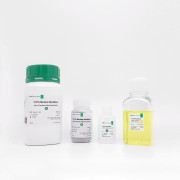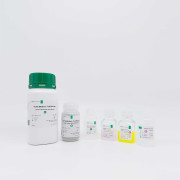



BBE + KVLB Selective Plating Set
- Product Code: GMNB-BBE01/GMNB-KVLB01(Bundled set)
- Availability: In Stock
Overview
BBE uses bile + esculin as its selective and differential principle: 2 % oxgall suppresses bile-intolerant species, esculin hydrolysis (β-glucosidase → aesculetin) chelates iron from ferric ammonium citrate to produce glossy black colonies, and 100 mg/L gentamicin suppresses facultative Gram-negatives. The B. fragilis group are characteristically bile-resistant, esculin-positive, and gentamicin-resistant — black-colony + bile + esculin is the rapid Wadsworth screen.
KVLB uses kanamycin + vancomycin + laked blood: 75 mg/L kanamycin suppresses facultative Gram-negatives; 7.5 mg/L vancomycin suppresses Gram-positives; the laked (freeze-thaw-lysed) sheep blood releases intracellular haematin, which supports haem-auxotrophic Bacteroides / Prevotella / Porphyromonas better than intact erythrocytes. After 5–7 days, pigmented Prevotella / Porphyromonas species produce characteristic black-pigment colonies. Paired use of BBE + KVLB + a non-selective primary plate (anaerobic CBA) is the Wadsworth-recommended primary plating triad for suspected Gram-negative anaerobe infections — intra-abdominal abscess, peritoneal fluid, brain abscess, gynaecological specimens, and dental / head-and-neck infections.
We also have
YCFA Modified Medium · YCFA Full Recipe · YCFA Base · Modified Chopped Meat Broth (ATCC 1490) · Chopped Meat with Carbohydrates · Beef Granules
Package Contents
Each GMExpression BBE + KVLB Selective Plating Set contains:
- 10 × BBE Agar plates (90 mm) — pre-poured, pre-reduced, individually sealed in oxygen-impermeable foil pouches with oxygen indicator. B. fragilis ATCC 25285 QC release-tested.
- 10 × KVLB Agar plates (90 mm) — pre-poured, pre-reduced, individually sealed with oxygen indicator. Prevotella melaninogenica ATCC 25845 QC release-tested.
- Vial G — Gentamicin sulphate stock (100 mg/mL, filter-sterilised), for top-up reinforcement of BBE selectivity (optional; standard plates are already supplemented).
- Vial KV — Kanamycin (100 mg/mL) + Vancomycin (10 mg/mL) stock, filter-sterilised, for top-up reinforcement of KVLB selectivity (optional).
- Vial H — Hemin stock (5 mg/mL in 0.05 M NaOH) — for supplementing user-prepared base agar.
- Vial K — Vitamin K1 stock (10 mg/mL in 95 % ethanol, amber vial).
- Instruction manual (A5 booklet, v1.0) with full Livingston 1978 BBE protocol, Wadsworth KVLB protocol, QC organism panel, and a Wadsworth plating-triad workflow annex.
Customisation options on request: dehydrated agar base (without supplements, longer shelf life) for in-house preparation; 60 mm contact plates for environmental sampling; bundled triad with anaerobic CBA (A3) for full Wadsworth primary plating; "Non-selective BBE" (esculin-differential only, no gentamicin) for research applications.
Composition — per 1 L equivalent unless stated otherwise
BBE Agar (Livingston et al. 1978 JCM 7:448; BD Difco 297878; per 1 L)
| Component | Concentration | Function |
|---|---|---|
| Tryptic soy agar (TSA) base — tryptone + soytone + NaCl + agar | 40.0 g (dehydrated TSA powder) | Base — tryptone 15 g, soytone 5 g, NaCl 5 g, agar 15 g |
| Oxgall (dehydrated ox bile) | 20.0 g | Selective agent — 2 % bile concentration |
| Esculin (6,7-dihydroxycoumarin glucoside) | 1.0 g | Differential substrate — hydrolysed by β-glucosidase to aesculetin |
| Ferric ammonium citrate | 0.5 g | Differential indicator — chelates aesculetin to form black colour |
| Hemin (post-autoclaving filter-sterilised) | 5.0 mg/L | Supports haem-auxotrophic B. fragilis |
| Vitamin K1 | 1.0 mg/L | Menaquinone precursor; fumarate reductase pathway |
| Gentamicin sulphate (post-autoclaving filter-sterilised) | 100 mg/L | Selective agent — suppresses facultative Gram-negatives |
Pre-autoclaving pH: 7.0 ± 0.2 at 25 °C.
KVLB Agar (Wadsworth ch. 6; BD BBL™ 297877; per 1 L)
| Component | Concentration | Function |
|---|---|---|
| Brucella agar base — tryptone, peptamin, yeast extract, NaCl, dextrose, agar, sodium bisulfite | 43.0 g (or 42.5 g Columbia agar base alternative) | Rich peptone base supporting fastidious anaerobes |
| defibrinated sheep blood | 50 mL (5 % v/v) | Critical — freeze-thaw-lysed; releases haematin (better than intact RBC) |
| Hemin (pre-autoclaving stock) | 5.0 mg/L | Supports haem-auxotrophic Bacteroides / Prevotella |
| Vitamin K1 (pre-autoclaving ethanolic stock) | 1.0 mg/L | Menaquinone precursor |
| Kanamycin sulphate (post-autoclaving) | 75 mg/L | Selective agent — suppresses facultative Gram-negatives |
| Vancomycin hydrochloride (post-autoclaving) | 7.5 mg/L | Selective agent — suppresses Gram-positives |
Pre-autoclaving pH: 7.3 ± 0.2 at 25 °C (matches Brucella base).
Use and Applications
- Clinical primary plating for intra-abdominal abscess fluid, peritoneal fluid, surgical wound exudate, brain abscess, post-surgical abdominal infection, and gynaecological specimens. Paired use of BBE + KVLB + anaerobic CBA is the Wadsworth-recommended primary plating triad.
- Rapid identification of Bacteroides fragilis group — BBE black-colony + bile-resistant + esculin-positive is the Wadsworth rapid screen.
- Identification of pigmented anaerobes — KVLB black-pigment colonies after 5–7 days identify Prevotella melaninogenica, P. intermedia, P. nigrescens, P. corporis, Porphyromonas gingivalis, P. asaccharolytica, P. endodontalis.
- Gut-microbiome culturomics — BBE is the standard selective plate for Bacteroides isolation from faecal samples; KVLB enables enrichment of Prevotella-dominant communities (the "Prevotella enterotype" research; plant-fibre-diet microbiome work).
- Oral / periodontal microbiology — KVLB is the reference medium for recovery of black-pigmented oral anaerobes (periodontitis pathogens P. gingivalis, P. intermedia).
- Veterinary anaerobe identification — BBE has been validated for canine, equine, bovine, porcine intestinal Bacteroides identification (selective profile is largely host-species-independent).
- Bacteraemia and CSF anaerobe workup — secondary plating from positive anaerobic blood-culture bottles to identify Bacteroides bacteraemia and Prevotella CSF infections.
Compatible Microorganisms
BBE — designed targets (positive growth, black colonies)
- Bacteroides fragilis (ATCC 25285) — large, raised, glossy black colonies after 24–48 h. Reference QC organism.
- Bacteroides thetaiotaomicron (ATCC 29148) — black colonies; bile-stimulated growth.
- B. ovatus, B. uniformis, B. vulgatus, B. caccae — all B. fragilis group; positive on BBE.
- Parabacteroides distasonis (formerly B. distasonis; ATCC 8503) — black colonies, slightly weaker esculin reaction.
- Bilophila wadsworthia — bile-loving sulphur-utiliser; characteristic black colonies (H2S + iron, not esculin).
BBE — non-target / suppressed
- Fusobacterium mortiferum — bile-tolerant; grows but esculin-negative (non-pigmented).
- Enterococcus faecalis — bile-tolerant but gentamicin-sensitive; suppressed. QC organism for the gentamicin selectivity check.
- E. coli, Klebsiella, Pseudomonas — bile-tolerant facultatives; suppressed by gentamicin.
KVLB — designed targets (positive growth, pigment after 5–7 days)
- Prevotella melaninogenica (ATCC 25845) — black-pigmented colonies after 5–7 days. Reference QC organism.
- Prevotella intermedia (ATCC 25611), P. nigrescens, P. denticola, P. corporis, P. tannerae — black-pigmented.
- Porphyromonas gingivalis (ATCC 33277), P. asaccharolytica (ATCC 25260), P. endodontalis — slower pigment formation (7–14 days).
- Fusobacterium nucleatum (ATCC 25586) — non-pigmented; characteristic lobed small colonies.
- Bacteroides spp. — recoverable but not differentiated from Prevotella; BBE is preferred for B. fragilis group.
KVLB — suppressed (selective check)
- Facultative Gram-negatives (kanamycin-sensitive): E. coli, Klebsiella, Enterobacter, Pseudomonas.
- Gram-positives (vancomycin-sensitive): Streptococcus, Staphylococcus, Enterococcus (most), Lactobacillus (most), Clostridium (most). N.B.: a small fraction of Lactobacillus and Pediococcus spp. are intrinsically vancomycin-resistant and may grow.
Preparation
Critical control points
- Gentamicin / kanamycin / vancomycin solubility and stability. All three antibiotics are water-soluble at the required stock concentrations. Filter-sterilise (0.22 µm). Store at 4 °C for up to 1 month (kanamycin, gentamicin) or 2 weeks (vancomycin); −20 °C for up to 6 months. Reconstituted stocks must be re-titre-tested if used after 2 weeks.
- Antibiotic temperature sensitivity. Vancomycin and gentamicin tolerate brief exposure to 50 °C but prolonged (> 30 min) causes activity loss. Add antibiotics last, mix, and pour plates within 15 min.
- Laked-blood preparation completeness. Freeze-thaw lysis must be complete — incompletely-lysed blood gives granular appearance and uneven Prevotella pigment. Two cycles typically sufficient; verify microscopically.
- Plate uniformity and pH. Pour at a level surface; ferric ammonium citrate precipitates at low pH producing visible specks. If BBE pH drops below 6.8, re-dissolve and adjust.
Cautions
Storage and Expiry · Safety
- Pre-poured plates (sealed in foil pouches with O2 indicator): 4 °C, light-protected. Shelf life 8 weeks for selective-grade work (BBE: gentamicin-limited; KVLB: vancomycin-limited).
- Dehydrated agar base (BBE / KVLB powder): 15–30 °C, sealed in original packaging. Shelf life 30 months.
- Vial G (Gentamicin) / Vial KV (Kanamycin + Vancomycin): 4 °C for 1 month; −20 °C for 6 months. Aliquot to avoid freeze-thaw cycling.
- Vial H (Hemin) / Vial K (Vitamin K1): 4 °C, light-protected. Hemin: 8 weeks. VK1: 6 months.
- Prepared plates, opened pouch: use within 24 h once oxygen-exposed.
Safety notes. Sheep blood is a Class 2 biological material — handle inside BSC; assume universal precautions. Gentamicin, kanamycin, vancomycin are antibiotics — handle as Category 2 chemicals; avoid dust formation; use face mask when weighing. SDS available on request.
References
- Livingston SJ, Kominos SD, Yee RB. (1978). New medium for selection and presumptive identification of the Bacteroides fragilis group. Journal of Clinical Microbiology 7(5): 448–453. [BBE primary reference]
- Finegold SM, Sutter VL, Mathisen GE. (1983). Normal indigenous intestinal flora. In: Human Intestinal Microflora in Health and Disease. Academic Press, pp. 3–31. (KVLB usage in gut-microbiome work.)
- Jousimies-Somer HR et al. (2002). Wadsworth-KTL Anaerobic Bacteriology Manual, 6th ed., chapter 9 (selective media for anaerobes). [Wadsworth KVLB protocol reference]
- CLSI M22, current edition. (QC for prepared media.)
- Carroll KC et al. (eds). (2019). Manual of Clinical Microbiology, 12th ed., chapter 60. ASM Press.
- BD Difco™ / BBL™ product information sheets 297878 (BBE Agar) and 297877 (KVLB Agar).
- Oxoid Manual 9th ed., CM1080 (BBE Agar) and CM0653 + SR0108 (KVLB).
- ATCC Microbiology Catalogue: Medium 2127 (BBE).