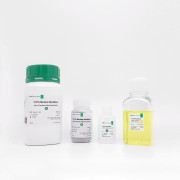
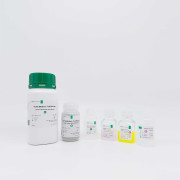
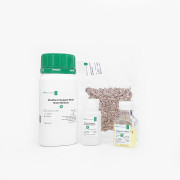
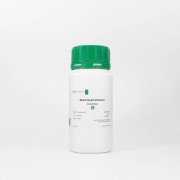
Bovine Rumen Fluid is a cell-free, sterile-filtered filtrate of fresh rumen contents, supplied as a ready-to-use enrichment supplement for anaerobic bacterial culture media in laboratory and medical-research workflows.
Overview
Bovine Rumen Fluid is a cell-free, sterile-filtered filtrate of fresh rumen contents, supplied as a ready-to-use enrichment supplement for anaerobic bacterial culture media in laboratory and medical-research workflows. Rumen fluid is the classic undefined growth-factor supplement of anaerobic bacteriology (Bryant & Burkey 1953; Hungate 1969): it delivers the branched-chain volatile fatty acids, long-chain fatty acids, haem/porphyrins, B-vitamins, peptides and unidentified cofactors that fastidious rumen and gut anaerobes require for primary isolation — factors that fully defined media supply poorly. Sterile filtration removes the native rumen microbiota, so the filtrate enriches your medium without introducing competing or contaminating organisms.
The product is collected from grass-fed beef cattle in Murray Bridge, South Australia, through our partnered farm — the same biosecurity-managed facility that supplies our defibrinated sheep blood and defibrinated horse blood. Each lot is produced from a single fresh collection, clarified and sterile-filtered on-site under cold chain, and the complete workflow from collection to dispatch is finished within two working days. Rapid, temperature-controlled processing preserves the native soluble profile and limits the post-collection metabolic drift — pH decline and shifts in the volatile-fatty-acid (VFA) profile — that degrades material handled more slowly. Because filtration is used in place of autoclaving, heat-labile growth factors are retained rather than thermally degraded.
Two grades are offered: a 0.22 µm sterilizing grade for routine anaerobe cultivation, and a 0.1 µm mycoplasma-reduction grade for sensitive medical-research workflows. Each vial contains 50 mL of rumen fluid in a sterile, aseptically filled 60 mL square bottle sealed under vacuum, which excludes oxygen to protect the oxidation-sensitive fatty-acid fraction during storage and transit. Because the bottle is held under vacuum, open it only after sanitising the cap and working in a sterile environment (see Packaging). The supplement is typically incorporated at ~10 % of the final medium volume and reduced/equilibrated by the end user inside an anaerobic workstation. It is the standalone counterpart to the rumen-fluid component embedded in the GMExpression M2GSC culturomics medium — for laboratories that prepare their own rumen-fluid-supplemented formulations.
Product Formats & Filtration Grades
Bovine Rumen Fluid is supplied as a frozen, cell-free filtrate. Choose the filtration grade that matches your contamination-control requirement:
| Grade | Membrane | Removes | Recommended for | Price (per 50 mL fluid vial) |
|---|
| Sterilizing grade | 0.22 µm | Bacteria, fungi, protozoa, residual feed particulate | Routine cultivation and enrichment of anaerobic bacteria; the standard choice for most media | AUD 200 |
| Mycoplasma-reduction grade | 0.1 µm | The above plus mycoplasma reduction | Sensitive medical-research workflows, or where additional assurance against mycoplasma is required | AUD 270 |
Prices shown are the list (minimum-batch) price per 50 mL fluid vial, excl. GST. The per-vial price falls for larger batches — see Volume pricing under Ordering. Cold-chain shipping is quoted separately at cost.
How this product is positioned
Rumen fluid on the research market is generally sold either as raw / strained bulk fluid (inexpensive, by the litre, not culture-ready) or as sterilized culture-ready fluid in small bottles. This product sits in a distinct premium tier:
- Cold sterile-filtration (0.22 / 0.1 µm), not heat sterilization — preserves the heat-labile growth factors (branched-chain VFAs, vitamins, undefined cofactors) that give rumen fluid its value and that autoclaving degrades.
- A 0.1 µm mycoplasma-reduction grade — a quality tier that raw and standard sterilized products do not offer.
- Made-to-order freshness from a single collection, with the full collection-to-dispatch workflow completed in two working days.
- Australian biosecurity, local supply — WOAH negligible-BSE-risk and foot-and-mouth-free origin, supplied within Australia and New Zealand without the international freight, import permits, and customs delay an imported bovine product carries. For ANZ laboratories this typically makes the total landed cost lower than an imported sterilized rumen fluid, despite the premium grade.
Packaging
- Fill volume (what you receive): 50 mL of rumen fluid per vial. Smaller custom fill volumes are available for large-volume clients on request.
- Container: sterile, aseptically filled 60 mL square (space-efficient) bottle — the ~10 mL void provides the headspace needed for the vacuum seal and accommodates ice expansion on freezing. (Each vial therefore holds 50 mL of fluid in a 60 mL bottle; you are charged for the 50 mL fluid fill.)
- Seal: the bottle is sealed under vacuum (no inert-gas headspace). The vacuum excludes oxygen, protecting the fatty-acid fraction and other oxidation-sensitive components and preserving the reduced character of the filtrate during storage and transit.
- Condition on dispatch: frozen (see Storage & Shipping).
Opening a vacuum-sealed bottle — open aseptically. Because the bottle is sealed under vacuum, breaking the seal draws external air inward. Before opening, sanitise the cap and neck with 70 % alcohol and unscrew the cap only inside a biosafety cabinet, on a sterile field, or beside a flame — never on an open bench. Opening in a non-sterile environment lets the inrush of air carry airborne microorganisms into the filtrate and contaminate it.
This is a cell-free supplement, not a viable inoculum. Sterile filtration removes all viable microorganisms. Bovine Rumen Fluid is intended as a growth-factor enrichment added to culture media — it is not a live rumen-microbiota inoculum and is not sold for in-sacco / in-vivo microbial transfer or for in-vitro fermentation assays that require a living mixed inoculum. If you need viable rumen microbiota, contact us to discuss a different product route.
Composition — indicative content of the clarified filtrate; values are not a release specification
What the filtrate supplies (typical / indicative ranges for clarified bovine rumen fluid)
| Component class | Typical level (indicative) | Role in culture |
|---|
| Total volatile fatty acids (VFAs) | ~60–150 mM | Carbon / energy; cross-feeding substrates |
| — Acetate | ~55–65 mol % of VFA | Major SCFA; energy source for acetate-utilising Firmicutes |
| — Propionate | ~18–22 mol % | Secondary SCFA; cross-feeding end-product |
| — Butyrate | ~10–15 mol % | SCFA; butyrate-producer signalling and energy |
| Branched-chain VFAs (iso-butyrate, iso-valerate, 2-methylbutyrate) + valerate | ~1–4 mM total (~2–5 mol %) | Essential growth factors for cellulolytic and many fastidious anaerobes — precursors for branched-chain amino-acid and membrane fatty-acid synthesis (Allison 1969) |
| Peptides & free amino acids | present | Nitrogen source and growth factors |
| Ammonia-nitrogen | ~5–25 mM | Primary N source for many rumen bacteria |
| B-group vitamins (folate, cobalamin, biotin, riboflavin, etc.) | present | Essential cofactors / coenzyme precursors |
| Haem / porphyrins | trace | Required by Bacteroides and other haem-auxotrophs |
| Long-chain fatty acids | present | Membrane-lipid precursors |
| Polyamines, purine/pyrimidine bases, unidentified growth factors | present | Support primary isolation of fastidious anaerobes ("rumen-fluid factor") |
| Minerals (K, Na, Mg, Ca, P, trace elements) | present | Ionic and micronutrient balance |
| pH | ~6.0–6.9 | Slightly acidic, reflecting rumen physiology |
Rumen fluid is an undefined natural product. The values above are indicative ranges drawn from the rumen-microbiology literature and will vary batch-to-batch with the animals' diet, individual variation, and collection timing relative to feeding. They are provided for orientation only and are not a guaranteed release specification. A representative Certificate of Analysis from a tested production batch is available on request — see the FAQ.
→Culturomics and Media Navigator
Need help matching this supplement to your microorganism — or starting from a target organism and finding the medium and supplements that fit? Use the GMExpression Culturomics and Media Navigator: a curated, cross-referenced tool that lets you (i) start from a medium or supplement and view the bacterial taxa it is recommended for, or (ii) start from a target organism (genus, species, or DSMZ/ATCC strain ID) and view the panel of GMExpression media and supplements that will support it. The Navigator integrates Bovine Rumen Fluid with the M2GSC, YCFA, Chopped Meat Broth, BHI-S, Wilkins-Chalgren, Modified GAM, Anaerobic Columbia Blood Agar, GMM, BBE, KVLB, CCFA, TPY, and Egg Yolk Agar catalogue.
Use and Applications
- Universal growth-factor enrichment for anaerobic culture media — incorporated at ~10 % of the final volume to support primary isolation of fastidious anaerobes that defined media recover poorly.
- Preparation of rumen-fluid media in-house — the rumen-fluid component for M2 / M2GSC (Hobson 1969; Browne et al. 2016), modified chopped-meat formulations, RGCA, and Hungate-type roll-tube media made on the bench.
- Cultivation of cellulolytic and fastidious rumen organisms — Ruminococcus albus, R. flavefaciens, Fibrobacter succinogenes, Butyrivibrio fibrisolvens, and others that depend on branched-chain VFAs and undefined cofactors.
- Human gut culturomics — recovery of Lachnospiraceae, Ruminococcaceae and Christensenellaceae and of SCFA-utilising butyrate producers (Faecalibacterium, Roseburia) whose isolation benefits from rumen-fluid enrichment.
- Branched-chain-VFA-dependent strain maintenance — as a defined supplement substitute is often inadequate, authentic rumen fluid remains the reference enrichment for these strains.
- Method development and benchmarking — as the "gold-standard" undefined enrichment against which defined-medium analogues are validated.
Application boundary. Because the product is cell-free, it supports culture of organisms introduced by the user; it cannot itself initiate a fermentation. For in-vitro rumen-fermentation assays (e.g., gas-production / RUSITEC studies) that require living rumen microbiota as the inoculum, this filtrate is a medium supplement only, not the inoculum.
Compatible Microorganisms
Cellulolytic and classic rumen anaerobes
- Ruminococcus albus, Ruminococcus flavefaciens — cellulolytic rumen Firmicutes
- Fibrobacter succinogenes (formerly Bacteroides succinogenes) — cellulolytic, succinate-producing
- Butyrivibrio fibrisolvens — butyrate-producing rumen organism
- Selenomonas ruminantium, Megasphaera elsdenii — lactate / SCFA metabolisers
- Prevotella ruminicola / Prevotella bryantii — proteolytic / xylanolytic rumen Bacteroidetes
Fastidious human-gut commensals (rumen-fluid-responsive)
- Faecalibacterium prausnitzii (DSM 17677)
- Roseburia intestinalis, R. hominis, R. inulinivorans
- Agathobacter rectalis (formerly Eubacterium rectale; reclassified Rosero et al. 2016)
- Anaerobutyricum hallii (formerly Eubacterium hallii; reclassified Shetty et al. 2018)
- Christensenella minuta (DSM 22607) and other Christensenellaceae
- Mediterraneibacter gnavus (formerly Ruminococcus gnavus) and Lachnospiraceae sp.
General anaerobes (parallel growth)
- Bacteroides spp., Bifidobacterium spp., Clostridium spp.
- Eubacterium sensu stricto, Veillonella spp., Anaerostipes spp.
Media Preparation & Use
The filtrate is incorporated into your own anaerobic medium. Two equivalent routes are supported, depending on whether your formulation is autoclaved or filter-finished:
1Thaw correctly. Remove the required vial(s) from −80 °C and thaw slowly at 2–8 °C (e.g., overnight). Equilibrate to room temperature and mix gently by inversion.
Open aseptically — the bottle is vacuum-sealed, so sanitise the cap with 70 % alcohol and unscrew it in a sterile environment (see
Packaging). Controlled thawing minimises precipitate formation and maintains homogeneity. (See
Storage & Shipping.)
2Dose at ~10 % of final volume. Add the filtrate at approximately 10 % of the final medium volume as a general starting point (e.g., 100 mL filtrate per 1 L of finished medium — so one 50 mL bottle prepares ~0.5 L of medium at 10 % v/v). Recipe-specific inclusion rates range from ~5 % to 30 % v/v — for example, classic M2GSC uses 30 % v/v. Follow your formulation where it specifies a rate.
3aRoute A — add before autoclaving (standard, simplest). Add the filtrate to the made-up base, adjust pH, dispense, and autoclave (121 °C × 15 min). Rumen fluid tolerates autoclaving in the classic recipes; this is the routine route for most anaerobe media.
3bRoute B — add aseptically post-autoclave (maximal activity). To preserve the heat-labile growth factors that distinguish sterile-filtered rumen fluid from autoclaved/lyophilised material, add the thawed filtrate aseptically after the base medium has been autoclaved and cooled, working inside an anaerobic workstation. Because the product is already sterile-filtered, no further sterilisation is needed.
4Reduce and equilibrate. Add your reductant (e.g., L-cysteine·HCl) and pre-reduce the finished medium inside the anaerobic workstation. Verify reduction by resazurin colour change (pink/red → colourless) before inoculation.
5Confirm pH. Rumen fluid is slightly acidic (~6.0–6.9); confirm the finished-medium pH matches your target (e.g., 6.8 for M2GSC-type media) and adjust if required.
Media-preparation cautions
Open aseptically; minimise air exposure when aliquoting. The bottle is sealed under vacuum, so breaking the seal draws external air inward — first sanitise the cap with 70 % alcohol and open only in a sterile environment (biosafety cabinet, sterile field, or beside a flame) to avoid drawing in airborne contaminants. Once opened, the oxidation-sensitive fatty-acid fraction is exposed to oxygen: work promptly, aliquot under nitrogen / inside the anaerobic workstation where possible, and avoid leaving opened material exposed to air.
Aliquot for single use; avoid repeated freeze–thaw. Repeated freeze–thaw cycling degrades activity and promotes precipitate formation. Aliquot on receipt into single-use volumes sized to your batch.
Medium will darken — this is normal. Rumen-fluid-supplemented media take on a characteristic amber-brown colour. This is expected and does not indicate a problem.
Undefined natural product. For studies requiring strict chemical definition, note that rumen fluid introduces undefined components by design. Document the lot number in your QA file and, for longitudinal work, reserve sufficient material from one lot or request a representative Certificate of Analysis.
Cautions
Filtration scope. 0.22 µm and 0.1 µm membrane filtration removes microbial cells (and, at 0.1 µm, reduces mycoplasma). It does not remove viruses, endotoxin (LPS), or prion proteins, and is not a viral-clearance, endotoxin-removal, or TSE-clearance claim. For its intended use as a supplement in bacterial anaerobic culture this is not a functional concern; if you intend any application involving mammalian cells or endotoxin-sensitive readouts, evaluate suitability independently.
Batch-to-batch variability. As an undefined biological derived from a single fresh collection, composition varies with diet (grass-fed), individual animal, and collection timing. For workflows sensitive to enrichment composition, validate each new lot against your reference organism and request a representative Certificate of Analysis.
Bovine biosecurity. Rumen fluid is a bovine animal by-product. It is collected in South Australia, where the national herd carries a World Organisation for Animal Health (WOAH) negligible-BSE-risk status and is free of foot-and-mouth disease. DAFF biosecurity / export documentation is available; international consignments typically require import permits and a veterinary health certificate (see Shipping).
Cold-chain dependence. Biological activity depends on maintained low temperature. Transfer to −80 °C immediately on arrival; do not allow prolonged warm excursions beyond the shipping window.
Storage, Expiry, Thawing & Shipping
Recommended storage & shelf life
- Long-term — 12 months at −80 °C (maximal activity): stored continuously at −80 °C, aliquoted, protected from light and under vacuum in its original sealed bottle, the cell-free filtrate carries a recommended shelf life of 12 months from date of dispatch. With no viable microorganisms left to continue metabolising and the oxidation-sensitive fatty-acid fraction held under vacuum (oxygen excluded), chemical degradation at −80 °C is minimal over this period.
- Short-term — −20 °C: acceptable for a few weeks of holding only; −20 °C does not support the full 12-month dating.
- Working — 2–8 °C: use within 24–48 h once thawed.
- Aliquot on receipt; avoid repeated freeze–thaw cycles; keep air exposure to a minimum. The 12-month shelf life assumes continuous −80 °C storage and single-use aliquoting.
Expiry basis. The 12-month −80 °C dating reflects the stability of a cell-free, sterile-filtered, vacuum-sealed (oxygen-excluded) filtrate — substantially more stable than whole, unfiltered rumen fluid held at −20 °C. Each lot is labelled with its specific expiry date. As an undefined biological, activity can drift near end of dating; for activity-critical workflows, verify performance against your reference organism if using material in its final months.
Recommended thawing
Remove from −80 °C and thaw slowly at 2–8 °C (e.g., overnight), then equilibrate to room temperature and mix gently before use. This controlled thawing reduces precipitate formation and maintains sample homogeneity.
Shipping conditions
- Australia & New Zealand: Australia Post Express with −20 °C gel packs, typically delivered within three business days. Transfer to −80 °C immediately on arrival.
- International: FedEx air freight on dry ice (UN 1845) to maintain deep-frozen conditions in transit. Transfer to −80 °C on arrival.
International customers — clear customs in advance. Because this is a bovine biological material, plan import / biosecurity clearance before dispatch. Most destinations require: a veterinary / biosecurity import permit; animal by-product documentation; consignee details matching official records; and, where requested, a BSE/TSE country-of-origin statement and written confirmation from the destination authority. We provide the expected dispatch date in advance so you can coordinate pre-clearance, and we supply the documentation your destination authority requires.
Ordering — Minimum Batch & Group Purchase
Bovine Rumen Fluid is made to order from a single fresh collection. The dominant production costs — rural-area collection labour, on-site sterile processing, and cold-chain logistics — are incurred per production run, largely independent of order size. A small order therefore carries the same fixed cost base as a large one. To cover these implied fixed costs and guarantee a genuinely fresh, rapidly processed product, orders are pooled into production batches subject to a minimum.
Minimum order value: AUD 5,000 per batch (excl. GST)
Every production batch must reach AUD 5,000 in committed orders before collection and processing are scheduled. This threshold underwrites the fixed collection, sterile-processing, and cold-chain costs of a fresh run and is what allows us to complete the entire collection-to-dispatch workflow within two working days.
Volume pricing — larger batches pay less per vial
Because the collection and sterile-processing costs are fixed per production run, a larger batch spreads those costs over more vials — so we pass part of that saving back as a lower per-vial price. This is the core incentive of the group purchase: the more participants (or the larger the order) in a single batch, the lower the price for everyone.
| Batch size (per production run) | 0.22 µm sterilizing — per vial | 0.1 µm mycoplasma-reduction — per vial |
|---|
| Minimum batch (AUD 5,000) up to 49 vials | AUD 200 | AUD 270 |
| 50 – 99 vials | AUD 190 | AUD 260 |
| 100 vials and above | AUD 180 | AUD 250 |
Per 50 mL fluid vial, excl. GST. The AUD 5,000 batch minimum always applies. The 0.1 µm grade is priced higher than 0.22 µm because the finer membrane costs more and fouls (clogs) faster; its large-batch floor is AUD 250. Cold-chain shipping (dry ice / gel packs) is quoted separately at cost. Volume-tier prices are confirmed at quotation.
Two ways to meet the minimum
You can meet the AUD 5,000 batch minimum either with a single-laboratory order (for example, 25 × 0.22 µm vials or 20 × 0.1 µm vials each reach AUD 5,000; larger orders secure priority scheduling), or — most economical for smaller individual requirements — through the group-purchase arrangement below.
Group Purchase Option — reserve now, pay when the batch is confirmed
To help customers meet the minimum batch requirement, we offer a flexible group-purchase arrangement that lets several laboratories combine their requirements into one fresh production run, with no upfront payment required to reserve a place:
1Submit your order — no immediate payment. Register the grade(s) and quantity you need. Your order is recorded against the current open batch; no payment is taken at this stage.
2We accumulate orders to the batch threshold. Orders from all participating customers are pooled until the combined total reaches the required AUD 5,000 batch volume.
3We notify all participants in advance with a planned dispatch date. Once the threshold is reached, we contact every participating customer ahead of time and confirm the planned collection and dispatch date.
4You pay, then we prepare and ship. Participants proceed with payment, after which we begin final preparation — fresh collection, on-site sterile processing, and dispatch.
Invite peers to join — reach the batch sooner
You are warmly welcome to share or forward this product page to colleagues, collaborators, or other laboratories who may be interested in joining the group purchase. Consolidated orders help reach the batch threshold more quickly and allow us to schedule production and shipping sooner — so a larger group means a shorter wait for everyone.
To submit a no-payment order, join an open batch, or register interest, contact support@gmexpression.com. We will confirm batch timing, the planned dispatch date, and (for international orders) the documentation required for pre-clearance.
References
- Bryant MP, Burkey LA. (1953). Cultural methods and some characteristics of some of the more numerous groups of bacteria in the bovine rumen. Journal of Dairy Science 36(3): 205–217. [Foundational rumen-fluid culture methods]
- Hungate RE. (1969). A roll tube method for cultivation of strict anaerobes. In: Methods in Microbiology, vol 3B. Academic Press, pp. 117–132. [Anaerobic technique; rumen-fluid media]
- Bryant MP. (1972). Commentary on the Hungate technique for culture of anaerobic bacteria. American Journal of Clinical Nutrition 25(12): 1324–1328.
- Caldwell DR, Bryant MP. (1966). Medium without rumen fluid for nonselective enumeration and isolation of rumen bacteria. Applied Microbiology 14(5): 794–801. [Defines the role rumen fluid plays as an enrichment]
- Allison MJ. (1969). Biosynthesis of amino acids by ruminal microorganisms. Journal of Animal Science 29(5): 797–807. [Branched-chain VFAs as essential growth factors]
- Hobson PN. (1969). Rumen bacteria. In: Methods in Microbiology, vol 3B. Academic Press, pp. 133–149. [Original M2 rumen-fluid medium]
- Browne HP, Forster SC, Anonye BO, Kumar N, Neville BA, Stares MD, Goulding D, Lawley TD. (2016). Culturing of 'unculturable' human microbiota reveals novel taxa and extensive sporulation. Nature 533: 543–546. [Modern rumen-fluid-supplemented culturomics]
- Dehority BA. (2003). Rumen Microbiology. Nottingham University Press, Nottingham, UK. [Reference text on rumen-fluid composition and microbiology]
Frequently Asked Questions
Q1. Is this a live rumen inoculum or a cell-free product?
It is a cell-free, sterile-filtered filtrate. Filtration removes all viable microorganisms, leaving the soluble growth-factor fraction. It is designed to be added to culture media as an enrichment, not used as a living rumen-microbiota inoculum. If you need viable rumen microbiota for in-vitro fermentation or transfer studies, contact us — that is a different product route with different processing and shipping.
Q2. How much rumen fluid should I add to my medium?
As a general starting point, add the filtrate at ~10 % of the final medium volume (e.g., 100 mL per litre of finished medium — so one 50 mL bottle prepares ~0.5 L of medium). Recipe-specific inclusion rates range from about 5 % to 30 % v/v — classic M2GSC, for instance, uses 30 % v/v. Follow your formulation where it specifies a rate; otherwise 10 % is a sound default for general enrichment.
Q3. Which grade should I choose — 0.22 µm or 0.1 µm?
For routine cultivation of anaerobic bacteria, the 0.22 µm sterilizing grade (AUD 200) is the standard choice and is sufficient for most media. The 0.1 µm mycoplasma-reduction grade (AUD 270) adds mycoplasma reduction and is worth the premium for sensitive medical-research workflows or where you want additional assurance. The higher price reflects the finer 0.1 µm membrane's greater cost and faster fouling; on large-batch / group orders it steps down to a floor of AUD 250.
Q4. Should I autoclave the medium after adding the rumen fluid, or add it aseptically?
Both routes work. Route A — add before autoclaving — is the standard, simplest approach and is fine for most anaerobe media, since rumen fluid tolerates autoclaving in the classic recipes. Route B — add the thawed filtrate aseptically after the base medium is autoclaved and cooled, inside the anaerobic workstation — preserves the heat-labile growth factors that distinguish sterile-filtered rumen fluid from autoclaved or lyophilised material. Because the product is already sterile, no further sterilisation is needed in Route B.
Q5. Why is the bottle vacuum-sealed, and why the−80 °C storage?
The fatty-acid fraction and the reduced character of rumen fluid are oxidation-sensitive. Oxidation can diminish the enrichment's growth-supporting activity, which matters when culturing oxygen-sensitive anaerobes. The bottle is sealed under vacuum to exclude oxygen during storage and transit; on opening, because the vacuum draws air inward, always sanitise the cap with 70 % alcohol and open in a sterile environment (biosafety cabinet, sterile field, or beside a flame) so airborne microorganisms are not drawn into the filtrate; −80 °C storage preserves activity for the long term. Minimise air exposure when aliquoting, and avoid repeated freeze–thaw.
Q6. Why is there a minimum order, and how does the group purchase work?
The product is made to order from a single fresh collection, and the collection, sterile-processing, and cold-chain costs are fixed per production run rather than per vial. A minimum order value of
AUD 5,000 per batch covers those fixed costs and lets us guarantee a fresh, two-working-day workflow. You can meet it with a single large order, or through the
group purchase: submit an order with
no upfront payment, we pool orders from all participants until the batch threshold is reached, then notify everyone in advance with the planned dispatch date — you pay at that point, and we then collect, process, and ship. You are welcome to forward this page to peers who may want to join; a larger group reaches the threshold sooner. See
Ordering.
Q7. Does sterile filtration remove endotoxin or viruses?
No. Membrane filtration removes microbial cells and (at 0.1 µm) reduces mycoplasma, but it does not remove endotoxin (LPS), viruses, or prions. For the product's intended use as a supplement in bacterial anaerobic culture, this is not a functional concern — you are cultivating bacteria. If you plan any application involving mammalian cells or endotoxin-sensitive readouts, evaluate suitability separately.
Q8. Can I get a Certificate of Analysis for my exact vials?
Because each lot is a fresh, single-collection natural product, we do not issue an individual certificate for every vial or batch. We can provide a representative Certificate of Analysis from a production batch submitted for independent testing, which characterises the typical composition and sterility of the product as a reference for your own validation. Lot-specific testing can be arranged as a paid add-on for workflows that require release-level QC.
Q9. Can I use this to prepare M2GSC or other rumen-fluid media myself?
Yes. Bovine Rumen Fluid is the standalone supplement for laboratories that prepare their own rumen-fluid-supplemented formulations (M2 / M2GSC, modified chopped-meat media, Hungate roll-tube media). If you would prefer a complete, ready-to-prepare culturomics kit with the rumen-fluid component already matched to the formulation, see the GMExpression
M2GSC — Rumen-Fluid Culturomics Broth.
Q10. What is the shelf life / expiry of the frozen rumen fluid?
Stored continuously at −80 °C, aliquoted, light-protected and under vacuum in its original sealed bottle, the cell-free filtrate has a recommended shelf life of 12 months from date of dispatch. Because the product is sterile-filtered (no viable microorganisms to keep metabolising) and the oxidation-sensitive fatty-acid fraction is protected under vacuum (oxygen excluded), degradation at −80 °C is minimal over this period. The 12-month dating requires continuous −80 °C storage — −20 °C is suitable only for short-term holding of a few weeks, and repeated freeze–thaw shortens usable life. Each lot ships with its specific expiry date; for activity-critical work, verify performance against a reference organism if using material near the end of its dating.
Q11. How is the price set, and does it fall for larger orders?
Pricing reflects the real cost of a made-to-order fresh product: most of the cost — rural collection, on-site sterile filtration, vacuum aseptic filling, cold chain, and biosecurity documentation — is
fixed per production run rather than per vial. The list price is
AUD 200 / 50 mL vial (0.22 µm) and
AUD 270 / 50 mL vial (0.1 µm) at the minimum batch. Because a larger batch spreads that fixed cost over more vials, the per-vial price falls in tiers —
AUD 190 / 260 at 50+ vials and
AUD 180 / 250 at 100+ vials (see
Volume pricing). The 0.1 µm grade is priced above 0.22 µm because the finer membrane costs more and clogs faster. In practical terms, one AUD 200 bottle makes ~0.5 L of finished medium and removes the need for your laboratory to maintain a fistulated-donor relationship, biosecurity handling, and on-site sterile filtration — the value rationale behind the price. Comparable rumen fluid elsewhere is sold either raw by the litre (not culture-ready) or heat-sterilized; this cold-filtered, mycoplasma-grade, locally-supplied product is positioned as a premium to both, and for ANZ laboratories typically lands at a lower total cost than an imported sterilized rumen fluid once freight and import permits are counted. Cold-chain shipping is quoted separately at cost.